Writings_Eavesdropping_Header-1-scaled.jpg

Eavesdropping + Typography

writer Stephen Banham

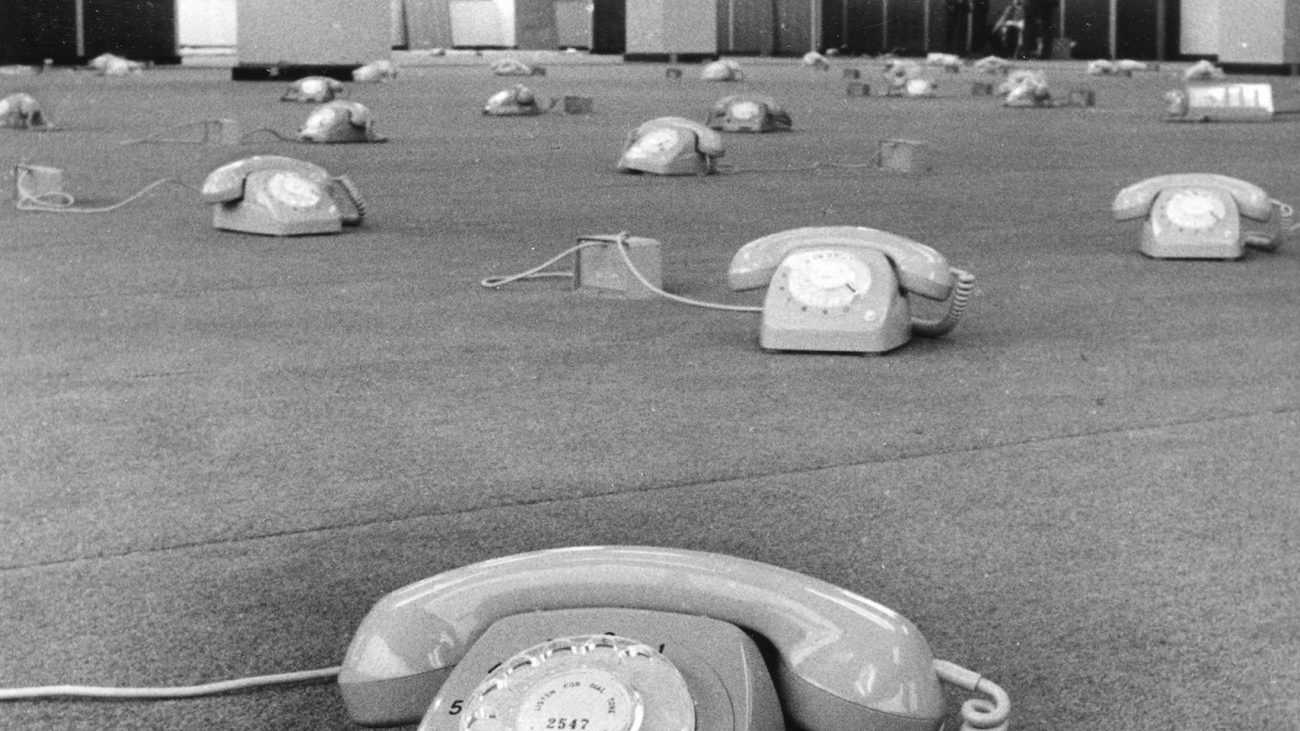
I’ve always been a bit of an eavesdropper. And for the people I am with, this can be a little bit annoying. Whether it’s in a café, restaurant or any other social environment, my attention is often split between the conversation right in front of me and the many other tantalising ones happening all around me.

Defined as using ‘surreptitious observation as a technique for sampling the intimate experiences of others’,1 eavesdropping is very appealing — especially the beautiful incompleteness of the communication. When eavesdropping (and especially when one’s attention is divided) what is often heard are fragments of conversations, short clips of a larger discussion. The eavesdropper will often stitch together these parts to create a kind of ‘franken-chat’, a weirdly abstracted (and often factually incorrect) assemblage of information. And that is what makes eavesdropping so playful and speculative – it begs the question ‘what was the entire conversation…?’, ‘in what context would that phrase actually make sense…?’ etc. In tantalising us with some hints, it begs more questions than it answers.

‘Walk & Talk’ eavesdropping is particularly interesting. This is when a conversation is momentarily overheard as the interlocutors briefly walk past. These incidental discussions build slowly on approach then quickly fade. This fleeting moment will invariably capture only a tiny portion of a phrase or sentence, making it even more speculative and compelling. What or who were they discussing? Such conversations happen every moment of every day, and yet are not acknowledged as a rich record of social history. Perhaps in the future, human histories will be traced not just through the familiar voices of the powerful but may also infuse the incidental voices of the everyday – the ‘chatter of the people’.

The informal, unscripted and casual nature of conversation renders it as the petty everyday experience on the periphery – a ‘marginal’ language not to be trusted as a cultural record.

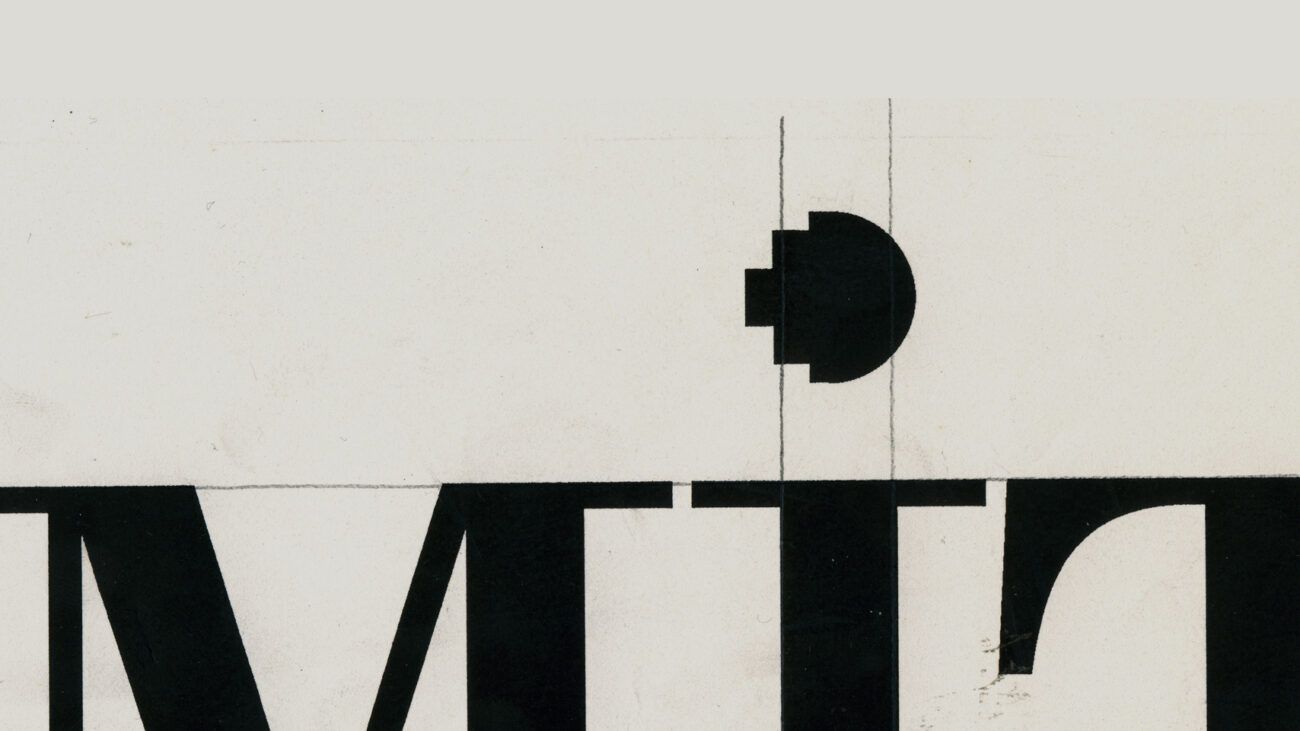
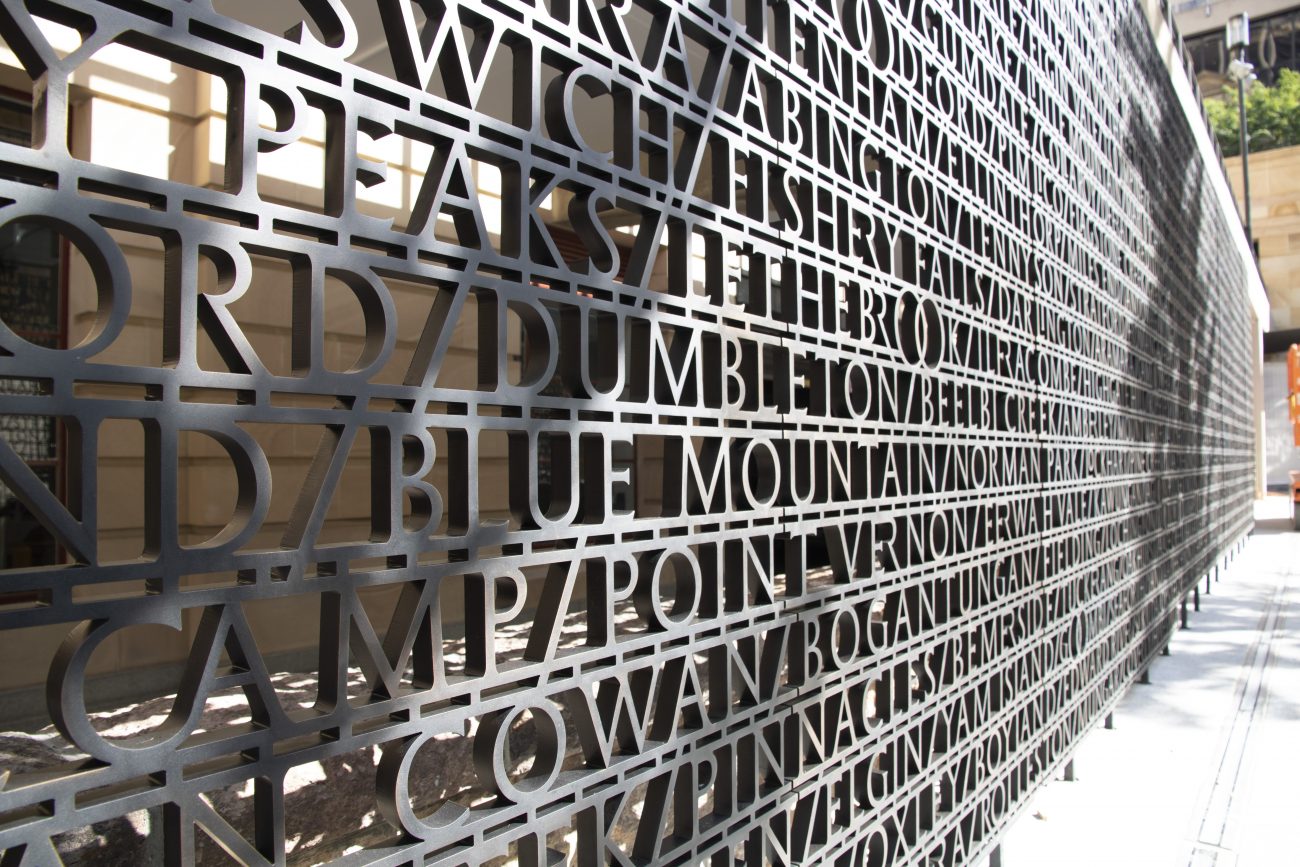
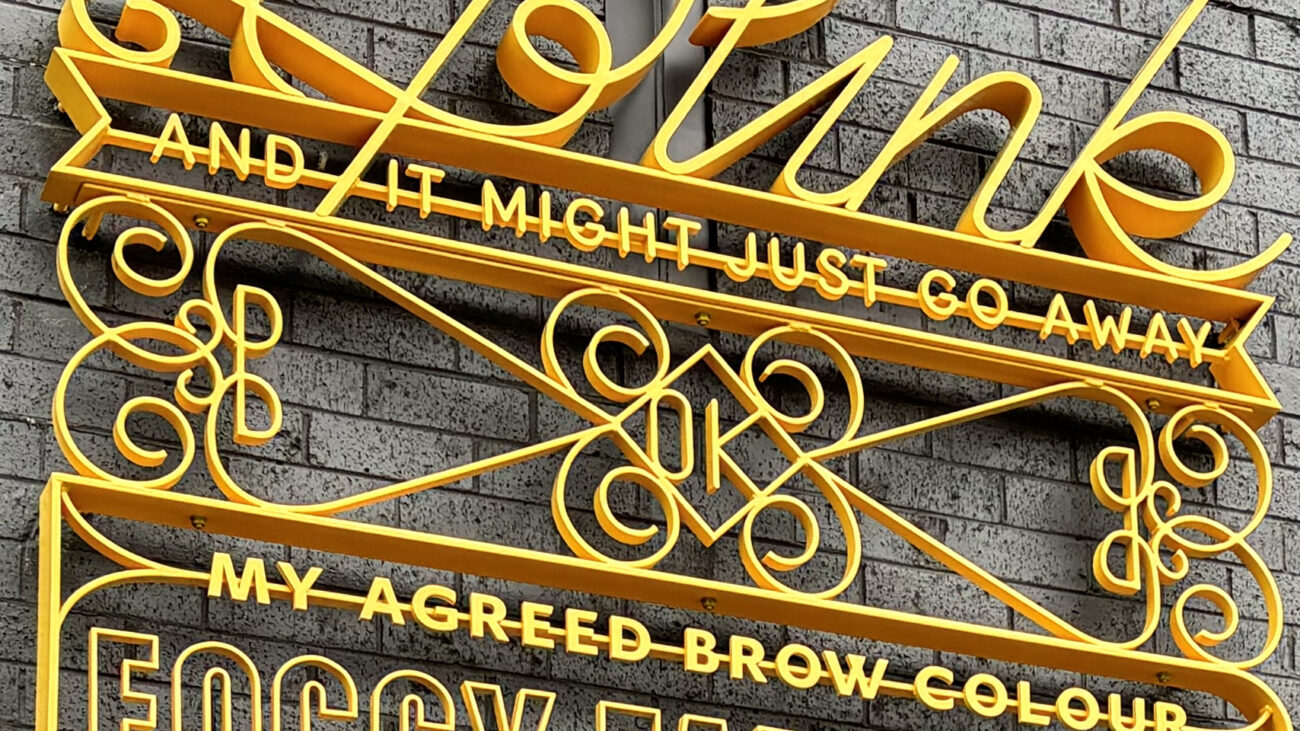
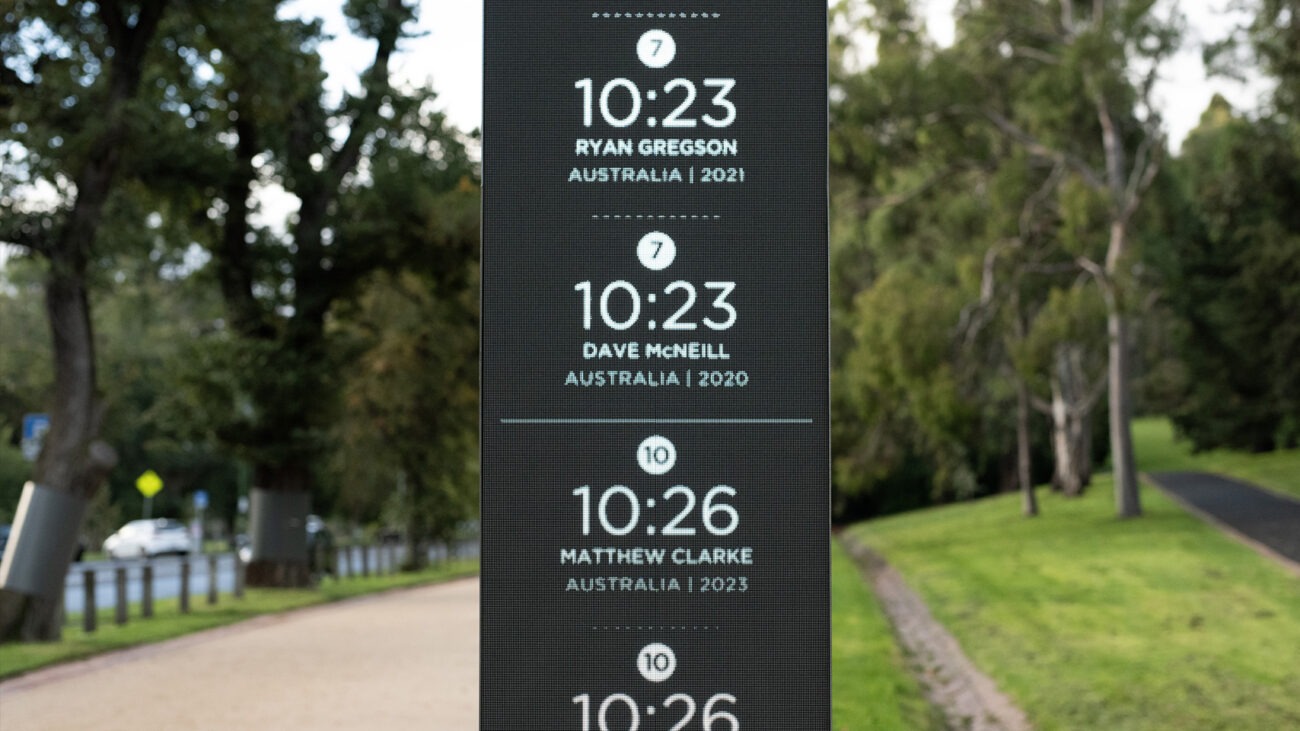
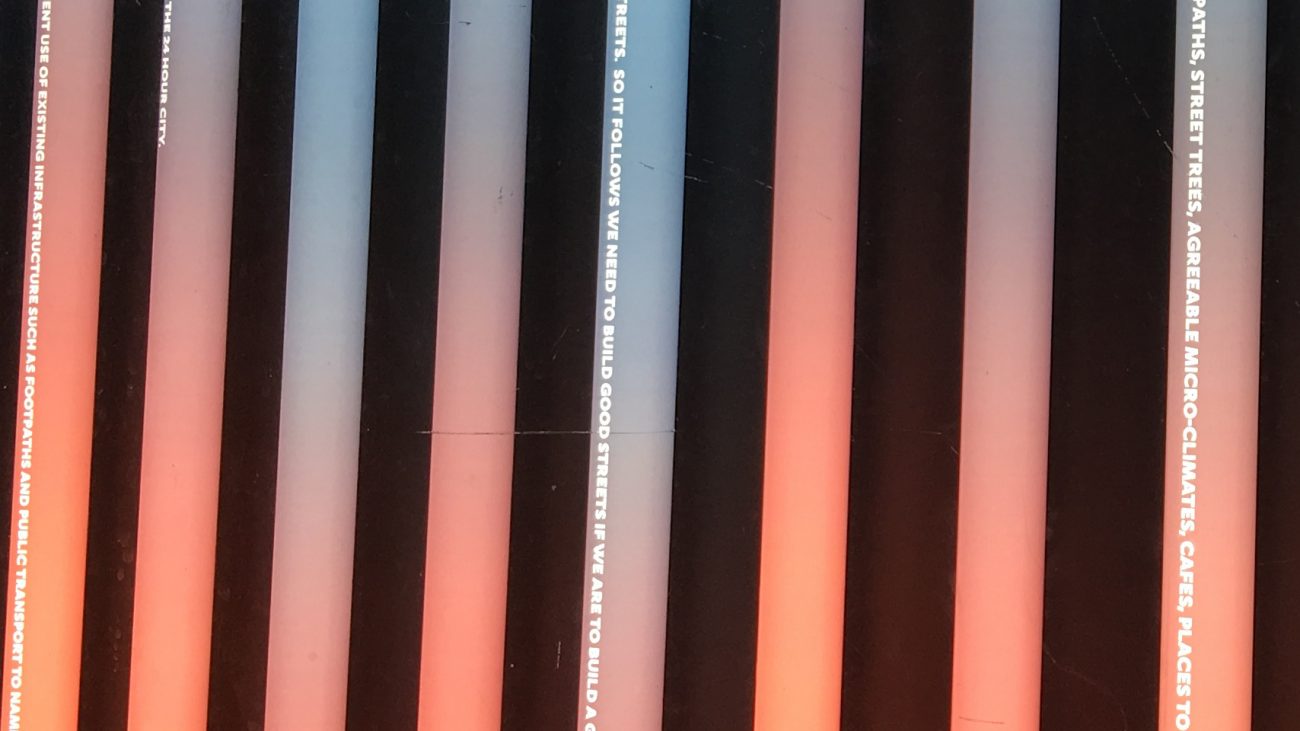
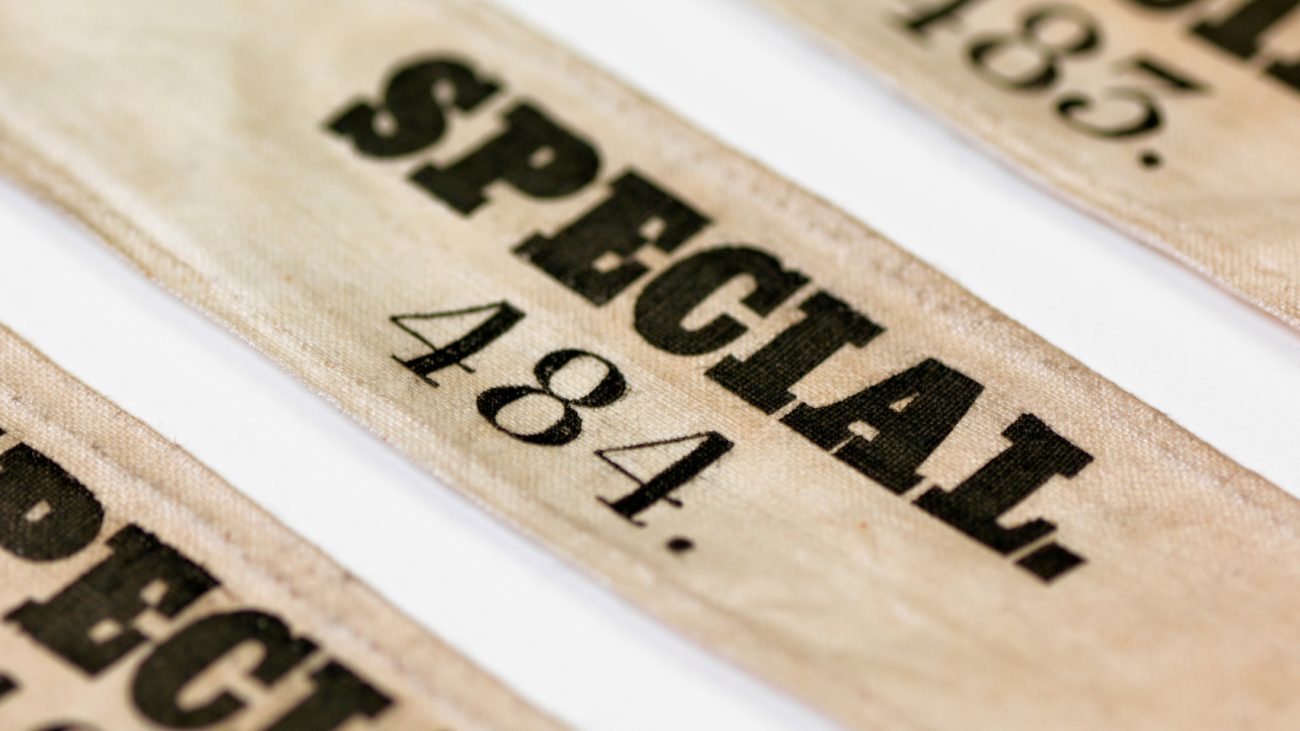
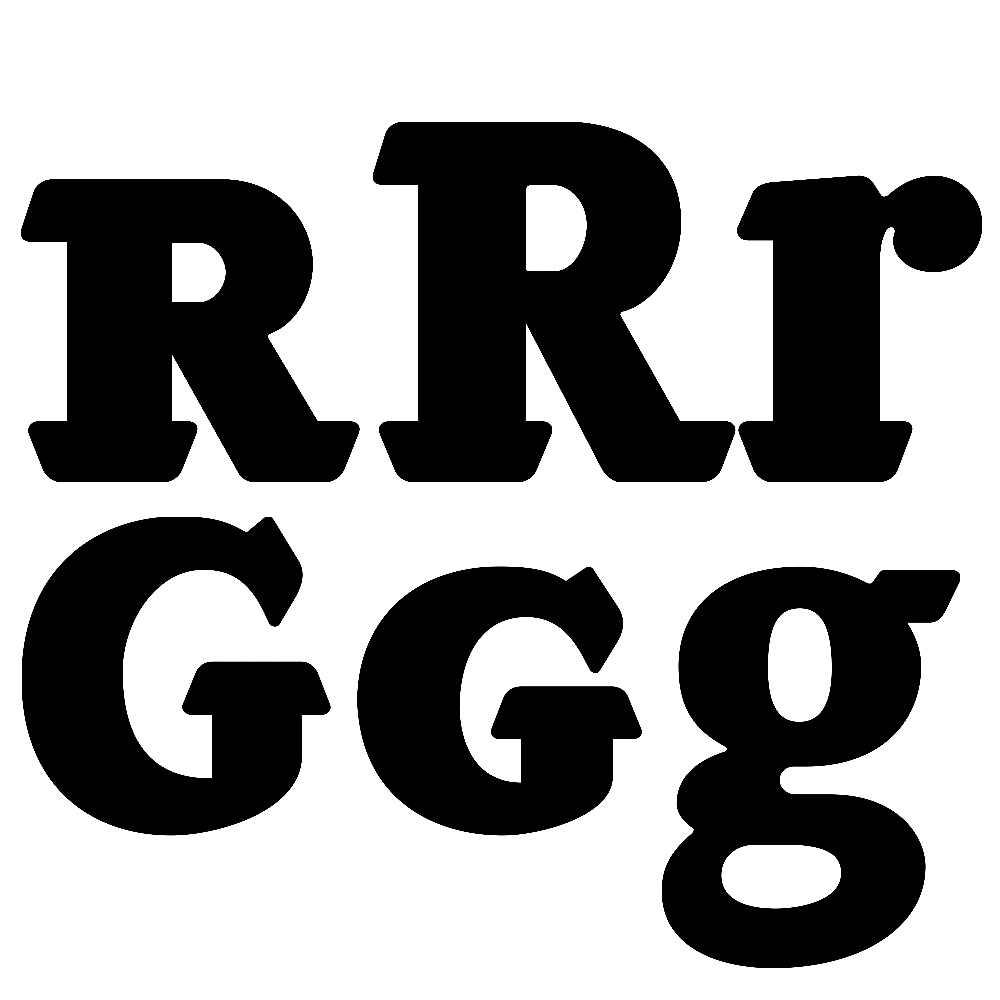
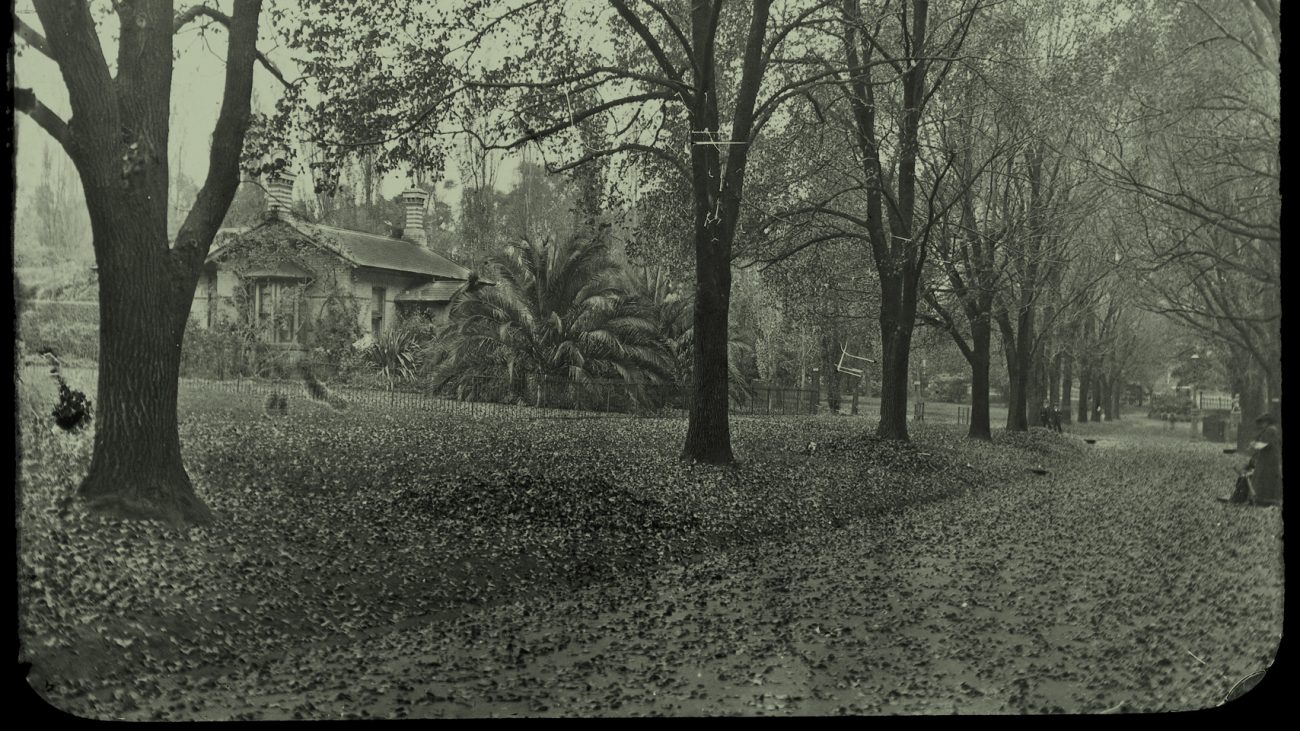
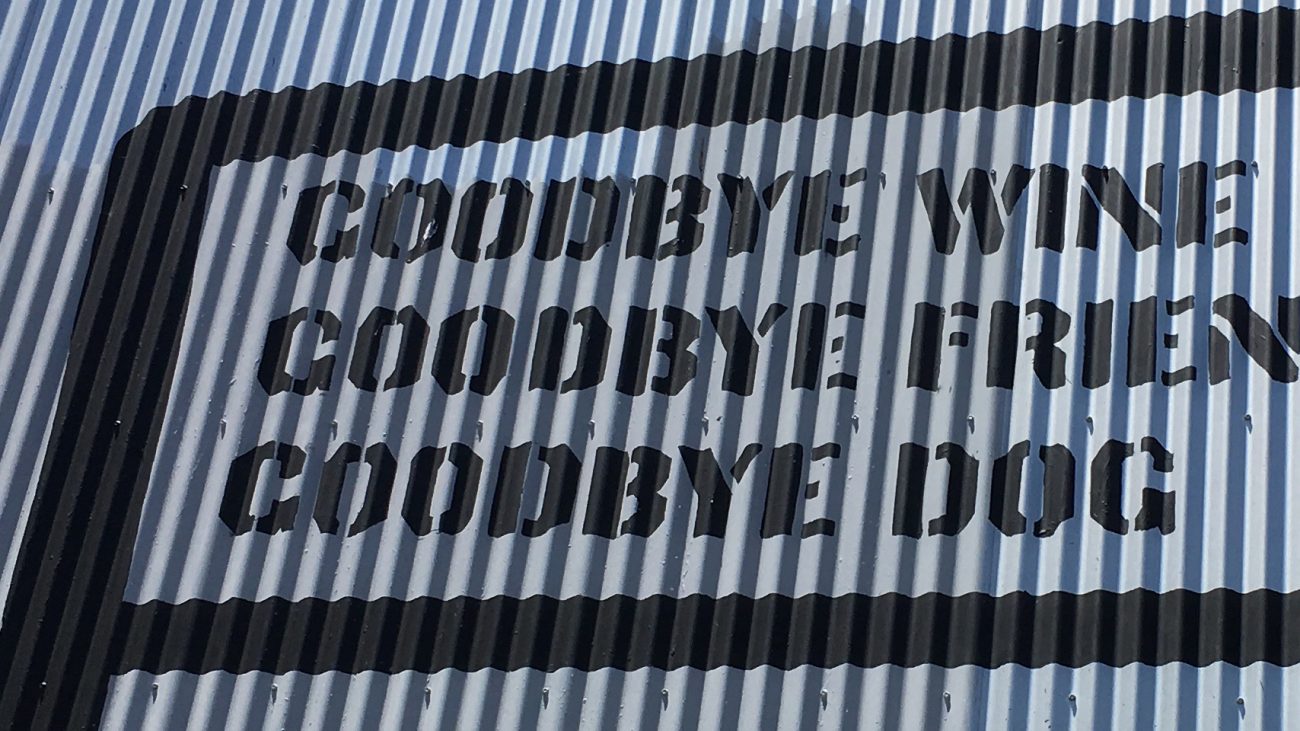
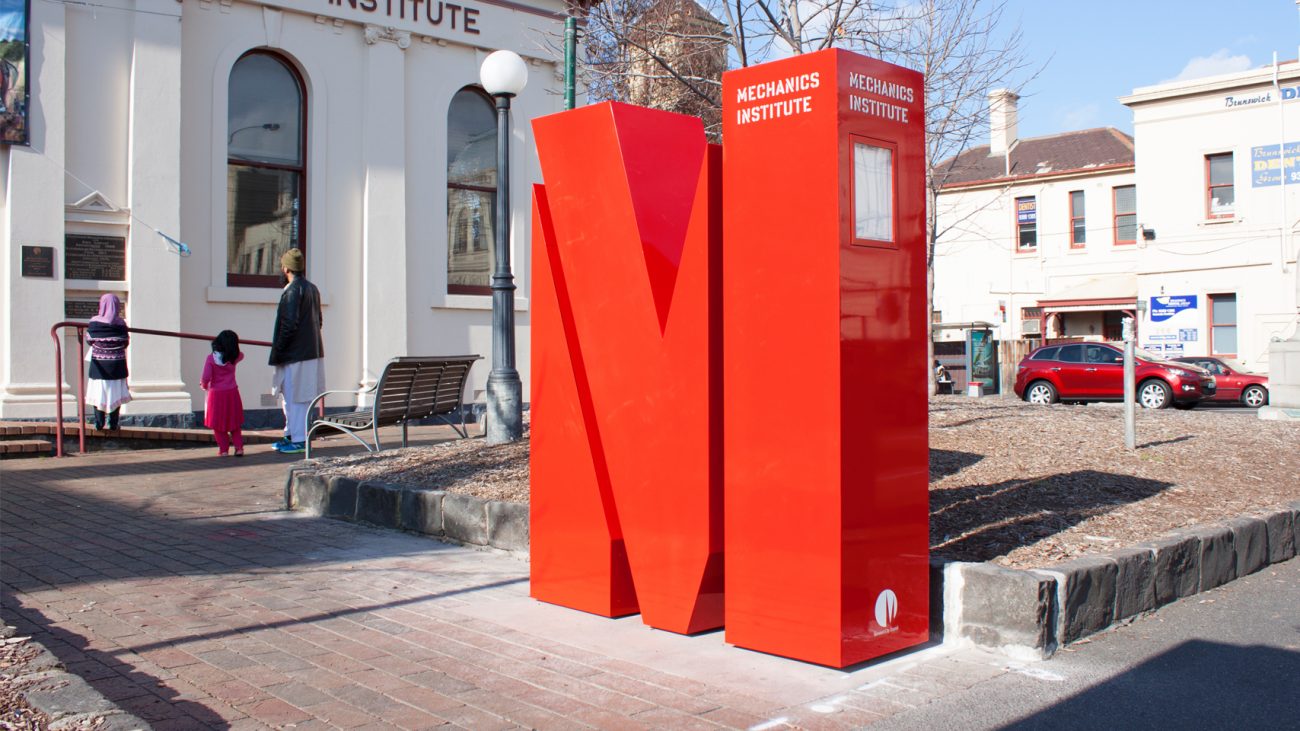
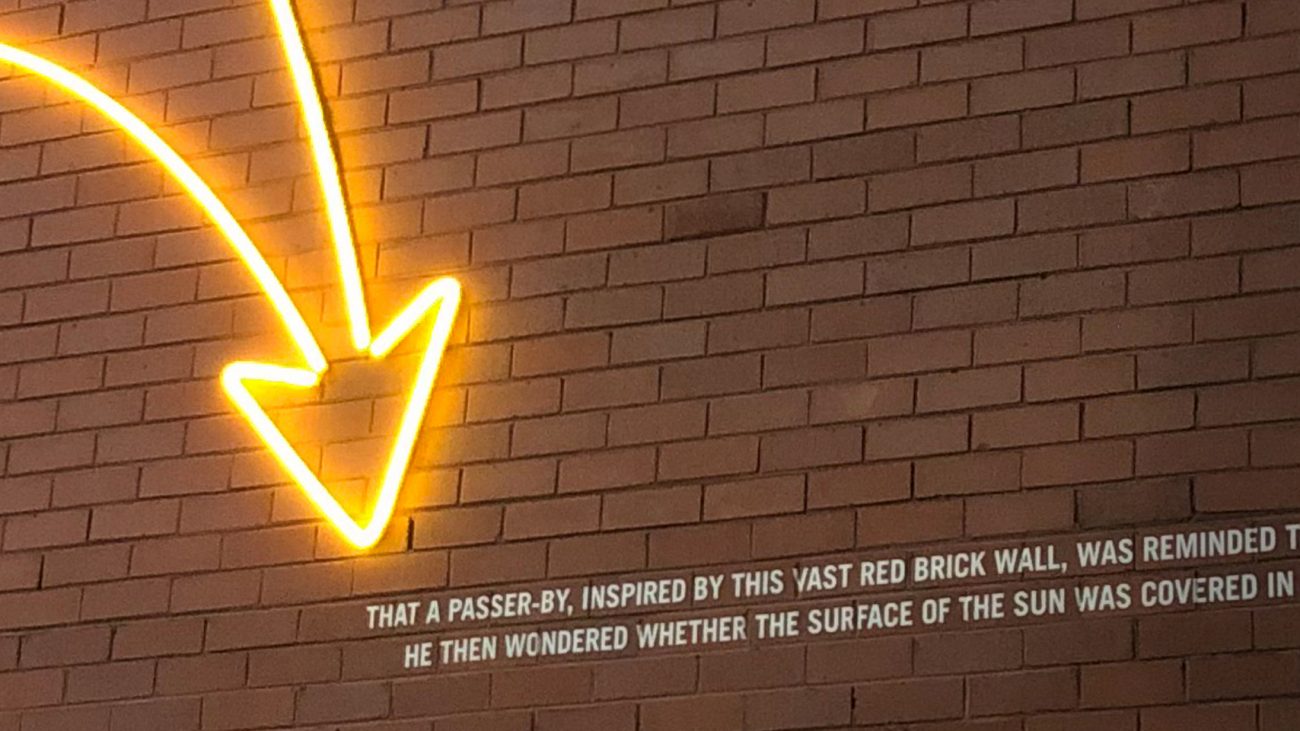
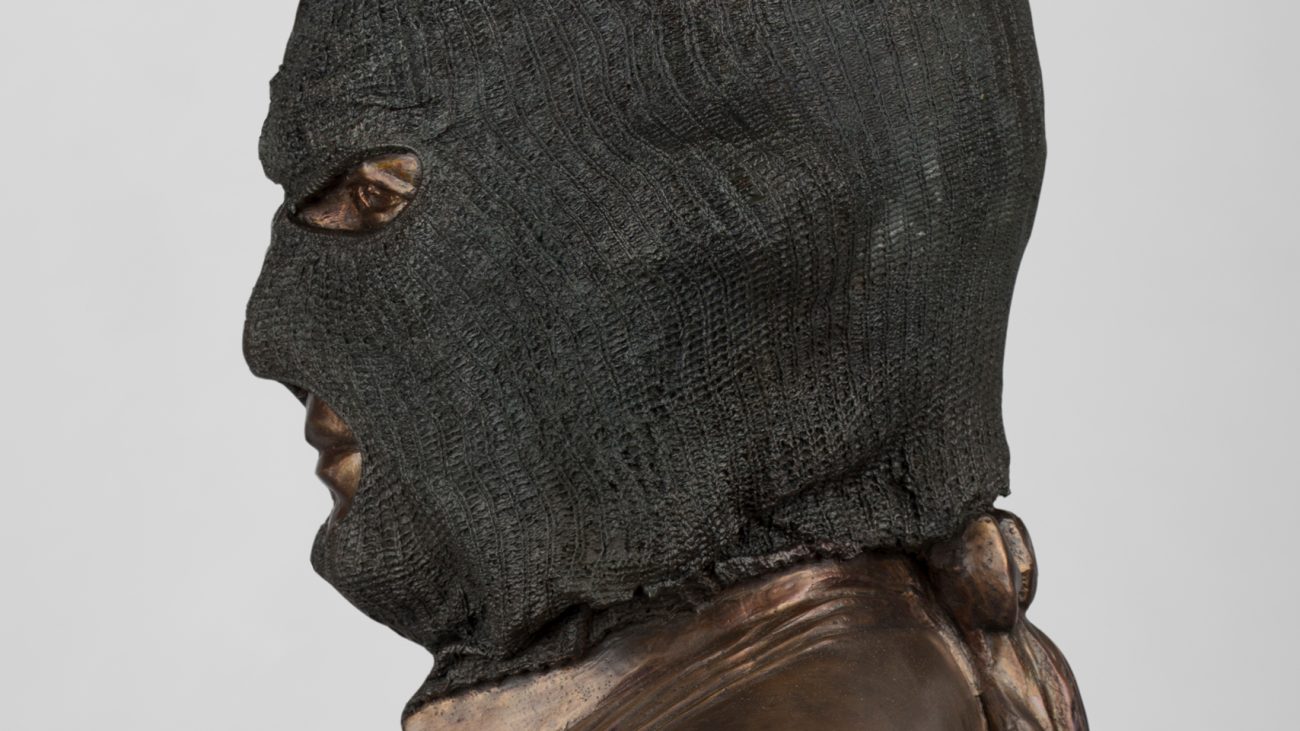
This line of enquiry is the basis of Monument to the Overheard, an artwork installed in Mouclif Park, Prahran, Melbourne. By typographically interpreting snippets of actual overheard conversation2, Monument to the Overheard re-casts these fleeting words and moments in solid powder coated metal, transforming these conversations from ephemeral into the monumental 3, the informal into the formal. The tension between formal history and informal (and forgotten) everyday experience is a familiar one. As a designer predominately working in the glam (Galleries, Libraries, Art, Museums) sector I find myself interacting with archives of many kinds. Whether an archival object is a beautiful old mediaeval manuscript or a bright orange 1970s Black-and-Decker kettle, there is an increasing recognition of the ‘marginalia’, the informal human traces, upon the object. These could be a spontaneous scribble in the margins of an ancient book, or a piece of paper sticky-taped to the underside of a vase etc. Not only does marginalia prove helpful to conservators and scholars in providing hints as to the provenance of an object, but it also tells us something of the broader social context of the object and the human relationship we have with it. Perhaps most importantly, the addition of informal marginalia makes that object completely unique, telling us its ‘uncommon history’ – an alternative story to the formal and familiar historical narrative. A history of the ‘now’.

When writing of marginalia in 1844 author Edgar Allen Poe argued that in making these marks ‘we talk only to ourselves: we therefore talk freshly, boldly, originally, with abandonment, without conceit’. For him the process of writing in the space around a text provides the reader an opportunity for comment ― with no eye for the memorandum book, but having a distinct complexion, deliberately pencilled because the mind of reader wishes to unburden itself of a thought.4

The idea of marginalia is more commonly known that one may think, in fact it’s part of our everyday lexicon – we describe people or issues outside the mainstream as being ‘marginalised’ – that is to say, existing in the outer margins of our attention. Through overhearing (ok, eavesdropping…) upon everyday conversations, Monument to the Overheard presents a ‘typographic marginalia’ – an informal record of the ‘human’ elements that will, in time, encourage passers-by to speculate as to what people from 2023 could have possibly been talking about to use such phrases5 and more importantly what insights this monument could offer in understanding the lived lives of that time. The significance of this is highlighted by the famous street photographer Walker Evans who remarked “Stare, pry, listen, eavesdrop. Die knowing something. You are not here long”.6


1 Locke, J. Eavesdropping. An Intimate History. Oxford University Press, (2010). P6
2 This primary research involving overhearing conversations from within Prahran Market during March 2023.
3 The closest precedent for this, and indeed much of the inspiration, is the experimental musical sampling by Australian practitioners such as Severed Heads, David Chesworth etc.
4 Taylor, Matthew. Activating (British) Historical Archive Marginalia as a Design Inspiration Resource, Centre for Cultural Ecologies in Art, Design, Architecture. P5.
5 One of the conversational fragments featured refers to the 2020–21 COVID pandemic.
6 Evans, Walker. Thompson, Jerry. 1982. Walker Evans At Work. P 161.

NameMagazine_01.jpg

Australian Graphic Design B-Sides Nº3: Name

AT: Andrew Trevillian  |  MM: Matthew McCarthy  |  sb: Stephen Banham (interviewer)

The mid to late 1990s. The emergence of digital design tools. A complete re-thinking of design. Responding to these dynamic times, a curious graphic design magazine emerged out of Melbourne. Simply called Name, it published four issues under specific themes – Name, Identity, Evolution and Ownership. I sat down with two of its founders, Matthew McCarthy and Andrew Trevillian, to discuss the why and how of Name.

Name Magazine, Issue 3

SB | With 30 years hindsight, how do you think Name has contributed to Australian graphic design?

MM | Well, the initial idea was to publicise the interesting work that people around us were doing. In many ways, it was about making connections, meeting people and working with them to build something that would help facilitate emerging talent.

SB | And do you think the contributor model in Name helped or hindered you in that process?

at | Emigré were doing kind of interesting take-overs with designers and various otherStudios. And that kept Emigré fresh – each issue would be dramatically different from the previous one.

mm | At the time, we were students at Swinburne (University), and there wasn’t any student representation in the selection process of graduate work. It was only the ‘powers that be’ selecting what they deemed to be commercial work’. And that was frustrating. It wasn’t that our work was ‘industry ready’, but we were not interested in the visual language of the time that would get us a ‘studio’ job. ‘Doing it yourself’ was our catalyst, and we embraced being the first computer generation going through Uni. And from a process point of view, Andy was at Cozzolino Ellett Design doing an Industry placement. At the time, he was learning all these great print techniques with colour, exploring image-making fused with the freedoms of the computer. We were in the cultural context of you (author) doing Qwerty, Mimmo is doing Symbols of Australia, Tony Ward making provocations… And then, on the commercial end there was Andrew Hoyne, Stephen Cornwell, etc as well.  Name started as an amplification of what it is to be an ambitious design student. We were excited to make an impression. Three or four of us would get together every weekend to debate Australian graphic design’s merits. Those conversations were seminal.

SB | Do you think that Name actually had its desired effect? Do you consider it a success, whatever that means?

at | It certainly wasn’t designed to be a commercial success. But I think it was a success in terms of learning to talk about design, learning to collaborate, and acquiring those important soft skills as well as the hard skills of production. We independently published and sold it through Greville Street Bookstore (Melbourne) and Ariel Booksellers (Sydney).

mm | We gave away ten copies to AG Ideas and Ken (Cato) who was very supportive of us. Name helped to position us differently from our cohort. We weren’t entirely conscious of how much of a commitment it was for us. We enjoyed working late nights in each other’s bedrooms, lounge-rooms or kitchens, trying to find our own voices as graphic designers. After all, why couldn’t we compete with Neville Brody or David Carson? What was the Australian design visual language? Why wasn’t Australian graphic design being championed? We hoped to generate a more significant awareness of local design.

SB | At that point in history (1990s) there was a huge generational shift. Do you think there was our own Melbourne version of the Vignelli vs Émigré debate?

at | I think so. But all are facilitated by the freshly available digital tools. We were really interested in creating our own identity. We were really fascinated by that Australian design identity. And Melbourne identity. And there was no internet. We’d send faxes to designers overseas discussing the merits of Australian design, and it would take days, weeks, months, or never to get a response. And I think that process was something we tried to capture in the work as well –a kind of fusion of analogue and digital aesthetics.

SB | What about the all-important role of naivety?

mm | Ken (Cato) brought out a diversity of studios to Melbourne through AG Ideas, and that event made a significant contribution to the local design discussion. In contrast, Garry Emery was a consistent model of design excellence. The naivety, or unbridled enthusiasm for design, drove us, helped build our profile amongst our peers, and created a talking point with the generation above us. It was our vehicle towards being design literate. For the first three issues, we were being naive about the expectations. By the fourth issue, we were too conscious of it. Something changed, and the moment passed. Somehow, upon graduating, our expectations for Name changed. Our passion moved towards a feeling of being obliged.

SB | Isn’t there’s a deep irony here – we all felt compelled to be sort of anti-industry as a way of getting into the industry…

mm | Part of the legacy of Ken was that he brought out all these design ‘rock stars’ who were rebelling, you know?

at | There was this rebellion fermenting with Stephen Heller and the Cult of the Ugly etc. And we were riding that wave. Name wasn’t trying to tear anything down.

mm | We were fearless and wanted to help shape graphic design. I would see a studio published in Émigré and say, ‘fuck, that’s the definition of success,’ and I want some of that.

SB | How much of Name still lives on in your design thinking and processes today?

mm | A fascination with print, especially its ephemeral permanence. Andy and I were commissioned to design an annual report for 200 Gertrude (now Gertrude Contemporary) based on the Name format; Nation Fender Katsalidis engaged us to present the redevelopment of the MCA (Sydney) building upon the Name visual language.

SB | If you were students right now, would you do this again, or would it even be possible?

at | I think it would be possible in an infinite number of new ways. I mean, print production is much more accessible in a short-run context. But if we move away from the medium and talk about the passion… we were so motivated by it. It’s our version of ‘getting a band together’. Just the instruments now would be very, very different.

mm | Remember, Name was also just before fanzines and short-run. The production processes available informed the design outcome.

at | Memories for me include arguing with you (mm), making up and all that stuff. Scrambling to screen-print the titling on the last day before the opening at Lounge.

SB | But if you were to do it now and it was just a website, after two, three, five, ten years, it would no longer exist. Having said that, Name magazine is virtually invisible online anyway….

at | Yes, it’s not really super Google-able, is it? However, that was the underlying joke of the magazine called Name.

Name Magazine, Issue 3
Name Magazine, Issue 2

 This interview took place at the design studio Clear in Fitzroy, Melbourne | Monday 17 March, 2025
NationalRational_Header.jpg

National or Rational?

writer and designer Stephen Banham published Typographic 74 (2024) for the International Society of Typographic Designers (istd)

The quest to develop a typeface that personifies a ‘national’ character has been a holy grail for many designers. Yet in today’s complex and multicultural world, are such typefaces a myth?  

There’s a fair chance that the casual observer will describe Gill Sans as the ‘national typeface of Britain’. After all, it’s everywhere, right? So, let’s unpack this narrative with some social context. When Gill Sans was created in 1927, Britain was still in the last gasp of empire – its population was overwhelmingly white, over 90 per cent Christian and nearly entirely English speaking – in other words, very culturally unified (or homogenous, depending on your take on these things). Let’s drill down further into why Gill Sans is often perceived in this way. Yes, Gill Sans is ubiquitous in Britain. But Gill Sans was never intended to be a ‘national typeface’. Instead, its widespread usage was catalysed by good fortune – being in the right place at the right time. Part of the rebuilding of Britain after the Second World War involved a rolling nationalisation of much of its infrastructure, particularly transport – bringing all rail, canal, docks and road haulage under the British Transport Commission in 1948 (some eight years after Eric Gill’s death) along with the founding of the National Health Service (nhs), the Central Electricity Authority, the British Transport Docks and the British Road Services. According to Mark Overden, the decision to create a unified identity, including the use of Gill Sans, was “one of the defining moments for this typeface and probably did more to weld it into the national consciousness than anything else up to that point”. This relationship continued not only through its typographic presence at major cultural events such as the London Olympic Games (1948), the Festival of Britain (1951) and the Coronation of the Queen (1953), but also its usage in early Television test cards which may have influenced its ultimate use in the bbc identity in 1997.

For many working in the design trade during this time Gill Sans was simply ‘there’ – readily available in the printer’s type tray. This enabled it to be used widely and consistently over many decades, steadily cultivating a cultural familiarity. You know that a typeface has truly become national in character when it enters the public imagination. The ubiquitous ‘Keep Calm and Carry On’
tea-towel is an example of this almost cryogenic freezing of a former national typographic voice. The poster speaks in a stoic, defiant and courageous British voice under wartime threat. It has been reproduced on millions of merchandise items since, the majority set in Gill Sans. The irony is that the original 1939 ‘Keep Calm and Carry On’ posters were not set in Gill Sans. Their mass production over many decades has cemented into the popular imagination the cultural relationship between that typeface and that message. Nevertheless, the mythologised memory is shot through with a nostalgic desire for a simpler time, and for many, a simpler Britain. Typefaces are rather blunt signifiers of nationhood, creating a ‘typographic shorthand’ that only becomes clear when reflecting homogenous populations. Contemporary Britain is now a far more culturally diverse place. The extraordinarily wide range of human experience within Britain is far too broad to be expressed through a single typeface. Yes, even Gill Sans.

national typefaces

Unlike typefaces that reflect a cultural aspect of a nation (think of the delightfully playful Banco or Mistral within a French context for example), a truly national typeface has a more ambitious aim – to speak on behalf of all citizens with a unified and overarching voice. This naturally relies on familiarity and usage over a long period of time, yet many countries have sought to declare a ‘national typeface’ from the moment of its very design.  One of the most explicit examples of a typeface built out of a specific ‘nation-branding’ client brief was developed by Stockholm-based branding agency Söderhavet for The Council for the Promotion of Sweden. The result is Sweden Sans, a geometric sans originally released in 2014 in four weights, now expanded to a Cyrillic. 

When interviewed by The Guardian, the agency described the process. “The brief was to replace the various fonts used by different Swedish government ministries, agencies and corporations with one integrated visual brand identity that would represent the country to the world in a fresh and dynamic way. Aesthetics are very important in Sweden and we have a long tradition of great architecture, furniture and design – so this was the natural next step. It was a big responsibility to be representing our country, but we were really proud to be asked.”  

“We started to think about how [the Swedish flag] would work with different typefaces, then started mood boards with different fonts and pictures – especially of old Swedish signs we’d seen from the 1940s and 50s,” said Jesper Robinell, Söderhavet’s head of design. This highlights one of the conundrums of designing and marketing ‘national’ typefaces. They suffer from a fundamental misalignment – reflecting either what the nation was or what it aspires to be, not what the nation is. These are quite different things, particularly when you consider that a marketer’s brief may vary significantly from the lived daily experiences of its citizens.  The problem does not lie in this specific project, the work of the agency or even the resultant typeface, but in the presumption that a brief of this kind can ever be truly answered. As a proposition for visual communication, ‘capturing a nation’ through a typeface may not be just complex, but impossible. 

With many decades of mass migration, multiculturalism, globalisation and the massive cultural force of the internet, perhaps even the intention of a national typeface (let alone its development) is something that simply needs to be surrendered. With the ever-increasing pace of creative output and redundancy, the era of intending a typeface to become a ‘national typeface’ is well and truly over. Attempts at summarising something as dense and dynamic as a nation’s identity through a typeface could only result in a brutally reductive tool, offering a greater capacity for division rather than unity. The designer of one of the many typefaces purporting to be ‘national’, Norway Sans, Robin Mientjes, reflected on the process: “These things (type) don’t become visuals without borrowing shorthand from everywhere else, at which point it stops being national or specific… the more we simplify, the more countries and cultures it can be. Does Norway Sans avoid that trap? Of course not.”  Nicklas Haslestad, Creative Director at The Scandinavian Design Group, describes the typeface as “…designed for the brand of Norway, inspired by our people. However, it is also used ‘commercially’ by Innovation Norway (a state-owned company and national development bank intended to stimulate entrepreneurship) to blur the lines even more.” Being neither available for sale or public download, the result is a typeface inspired by the people but not to be used by the people.

from the top

Why should people feel a national kinship to a typeface anyway? After all, the power and influence of nationhood itself appears to be in decline. As the British novelist Rana Dasgupta noted, “after so many decades of globalisation, economics and information have successfully grown beyond the authority of national governments.” Within the graphic design community there is a growing scepticism about the concept of national typefaces. Design critic Michael Worthington noted that “National traits in type design were once formed by the typographic history and legacy of the country and culture where type designers were educated or (where they) practiced. … this has diminished somewhat with the rapid global exchange of local design ideas and forms.” 

In his reflections on his 2007 typeface National, type designer Kris Sowersby concluded that “…because we live in a networked world where cultures are embraced and shared, designers use typefaces for their visual subtleties, aesthetic and inherent quality, not purely because of their geographic origin.” His typeface National was itself a response to seeing the New Zealand design publication The National Grid set in Helvetica and Times. “The National Grid was the perfect example of what I thought was wrong with New Zealand design: we were forced to use type from over there instead of here. And, so, with these fevered thoughts I started to draw National. Since I drew National my patriotic zealousness has mellowed. The irony of drawing a typeface for locals with subsequent international popularity is not lost on me. It’s also ironic that New Zealand has no endemic typeface designs to draw upon, unlike the usa and Europe for example. So all of my typefaces — including National — are intrinsically tied to the typography of other nations. Slowly, but surely, my typefaces have been embraced by the local design community.”

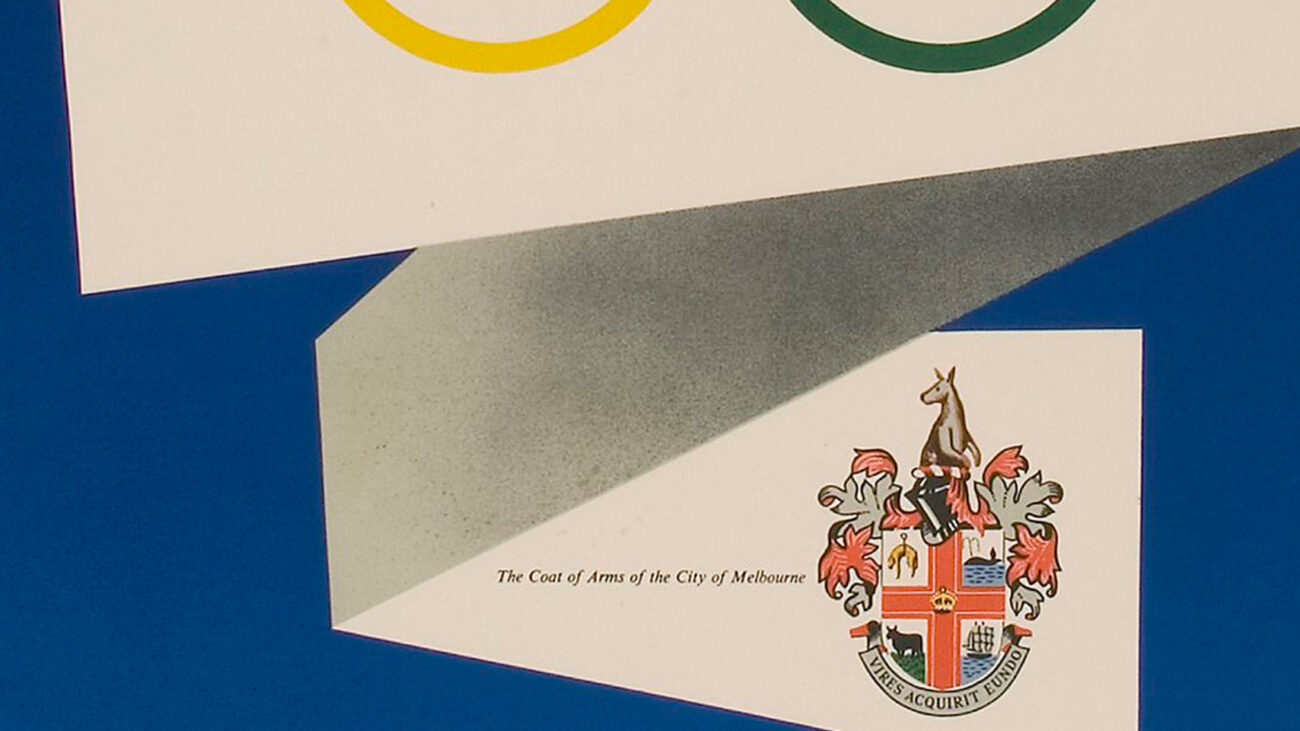
Sowersby’s description of this process as “slowly but surely” hints at the way that a typeface could possibly represent a nation’s people. It is achieved not through intent but through a deep and enduring assimilation. The uniqueness of national identity is noted by design writer John O’Reilly in the renowned ‘Brand Madness’ issue of Eye: “When it comes to identity the biggest significant difference between a nation’s identity and a brand identity is time. It’s about longevity.” Perhaps one of the clearest and most enduring mediums for projecting national identity is the flag. During the opening ceremonies of Olympic Games, we see the flags achieving a simultaneous graphic reduction and cultural unity. Equipped with a comprehensive toolkit including image and colour, flags achieve immediate recognition free from the linguistic baggage typefaces bring with them. This highlights the shortcomings of typefaces as a medium for national expression.  

So why does the aspiration of a national typeface persist? Part of that answer may lie in the controlling tendencies within branding – a culture based on planning and strategy rather than acknowledging that some things take time, and need to take their own natural direction. For a mindset more comfortable with novelty and redundancy than with investing over long periods of time, this continues to prove challenging.  Contemporary attempts at developing national typefaces operate within larger national marketing projects. This creates a ‘top-down’ model, which is at best insincere, at worst manipulative. Because any ‘nationally-adhesive’ typeface requires sustained use over time, it can take decades for such branding projects to develop trust, familiarity and clarity.

Branding has long been the natural home for custom typefaces. The development of a unique ‘typographic voice’ is now considered a central part of forming a larger ‘brand persona’. The binding element within this audience is the ‘belief in the brand’, across cultures, languages or locations. A single, cohesive corporate message to this highly unified audience suits the medium of custom type design well. One of the most enduring and distinctive examples of this would be the Emirates brand typeface EK (1990). So effective is it that even when I show just one letter of this typeface to my undergraduate students, it is immediately identified. Why is this? Because it contains that all-important ‘secret spice’ – consistent usage across a long period of time.

Another way that ‘cultural’typefaces are often marketed as ‘national’ typefaces is through referencing local language. The relatively recent strategy of integrating the typeface around (or even basing it on) indigenous languages is a very progressive and inclusive development. An excellent recent example of this is Colophon’s Wales Sans (2015), which, as the name suggests, incorporates the Welsh language. As Colophon’s website explains, “Though rooted in the Latin alphabet, the written Welsh language omits certain Roman stalwarts (j, k, q, v, x, z) and comprises 28 total characters with the inclusion of eight digraphs, or letter-combinations. These digraphs — ultimately treated as true ligatures in the instances of Ch, ch, dd, Ff, ff, Ll, Th, th — would come to set the tone for the proposal put forth: a series of three typefaces, each with Standard and Headline variants, the latter of which would put the provenance of the Welsh language front and centre.”

The world we now live in consists of nations made up of a plethora of co-existing cultures. These cultures derive their identities from a range of factors such as language, ethnicity, faith and politics. Where these local cultures and communities exist, typefaces work very effectively if they use that small-scale cultural unity in the outward projection of a unique typographic voice. The display typeface Hokotohu (2007) was created by klim Type Foundry as part of the Hokotehi Moriori Trust identity under direction from Charlie Ward. As its designer Kris Sowersby explains, “Hokotehi represents Moriori people — the descendants of Rongomaiwhenua and Rongomaitere on the islands of Rēkohu and Rangihaute (Chatham Islands), in New Zealand and elsewhere. Hokotohu’s serifs are modelled on Rākau momori. Rākau momori are unique ancestral Moriori carvings (or bruisings) into living kōpi trees. Many of these carvings, or dendroglyphs, survive today. They have powerful spiritual associations, although their meanings are debated.” This approach to custom typography makes for a distinctive and meaningful representation of a specific place and culture. Its success stems from an awareness of its ‘cultural hinterland’, avoiding that tipping point when ‘place-making’ typefaces fail as a cultural reflection when audiences become too large or diverse. Never intended to be a ‘national’ typeface, Hokotohu is a very successful ‘cultural’ typeface.

place

The communication of place is much easier to achieve when centred upon a town, suburb, city or region rather than an entire nation. Over the past two decades, there have been countless ‘city-destination’ typefaces developed. These include Monotype’s recut of Edward Johnston’s Johnston100 as the voice of London (according to London Underground’s Design and Heritage Manager, “Johnston is not just our typeface. It is the very typeface of London”); Berlin Sans by hvd Fonts (“Only when type is in use it really starts to live”); and Big Shoulders for Chicago by xo Type, amongst many others. All of them use the strategy of re-framing historical references for digital use, and in doing so, ironically translate a sense of place into a place-less medium. 

As Senior Type Designer for Monotype, Malou Verlomme notes: “When designing a typeface for a [place], one should look to its typographical heritage. Each [place] carries a rich vernacular visual background, through [the place’s] role in arts and cultural history, which can be the starting point of a typeface. But one should also focus on the present. The vibe and energy of a city are to be experienced, not researched. It’s about how people live. This is perhaps a more difficult aspect to capture, but it is nonetheless crucial.” Importantly, Verlomme acknowledges the element of time, noting “The relationship between type and a city goes two ways: the type should reflect the city’s heritage and culture, and through the font’s extensive use, the relationship will bind”. Commenting on the multilingual Dubai Font, type designer Nadine Chahine commented, “It’s about having one hand to the past and one hand to the future. You build on what you have, but you’re also looking forward.” Beyond its use in the tourism and government sectors, Dubai Font was released for worldwide public use. Its popularity grew from its immediate government adoption into cultural events and corporate rebrands, Monotype claiming that it “became a symbol of patriotism, of devotion and pride for the city.” Canadian type designer Patrick Giasson notes that city-themed typefaces do tend to highlight a ‘touristic image’ of a city. “It resonates with visitors but, at a deeper level, not with its inhabitants. It represents the aesthetic presence of a city (usually from a past era), but not its social experience. Ultimately, a city is too complex and diverse to be captured by a typeface.” 
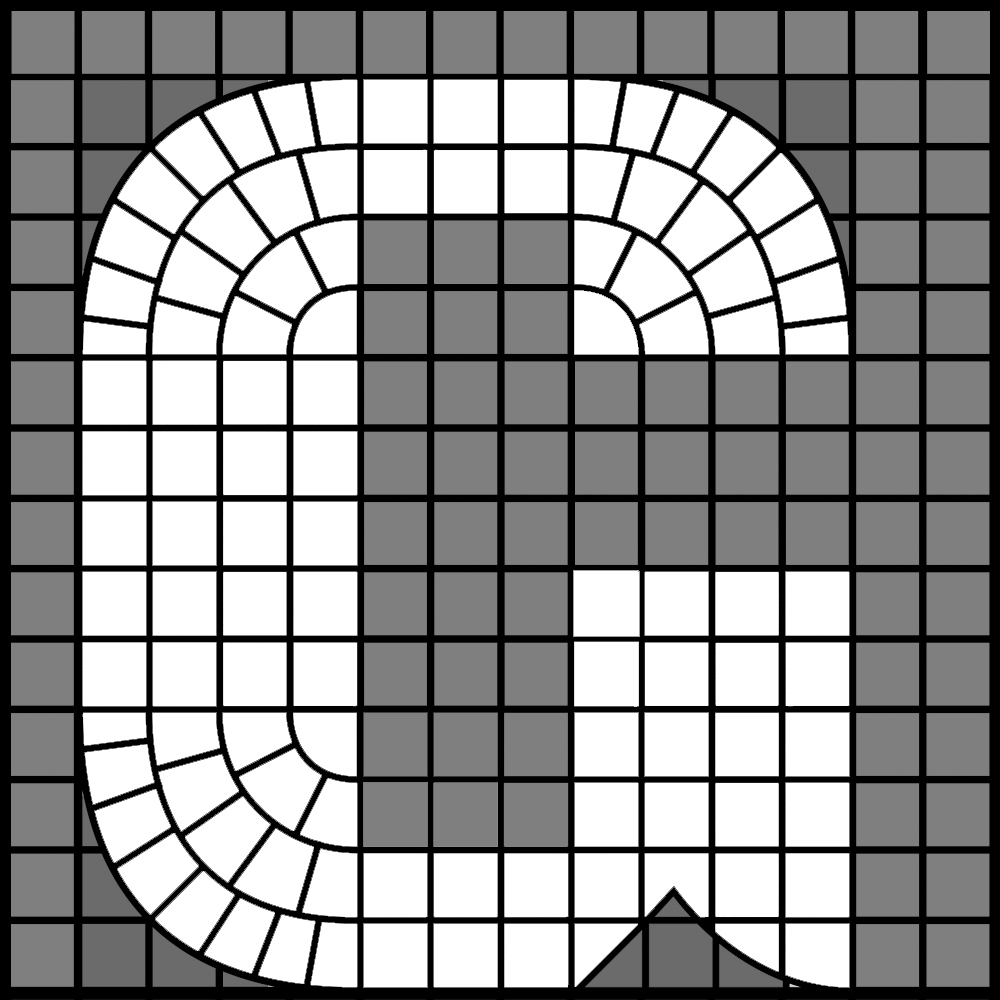
The most well-known of all ‘city’ typefaces is Gotham byHoefler & Frere Jones, which offers a wonderful case study of a typeface that emerged from a tightly focussed reference point, the New York Port Authority Bus Terminal Signage, into one of the clearest typographic voices of that metropolis. This was achieved not through any grand place-making marketing (it was originally commissioned for GQ Magazine) but rather by a natural process of adoption, usage and familiarity. Its anchoring to its city of origin was highlighted through its use in the cornerstone inscriptions of the Freedom Tower at the site of the former World Trade Centre. In 2008 it famously also went on to represent the state’s progressive politics when it featured as the campaign typeface for the Democratic Party’s presidential candidate, Barack Obama.

follow the money

Many of the purported ‘national’ typefaces present very lofty social ideals, such as claims to ‘meaning-making’ or ‘language-saving’. Yet the familiar adage ‘follow the money’ soon uncovers that the real intention lies elsewhere – namely, marketing for investment and tourism. Wales Sans was commissioned by the Tourism department of the Welsh Government; Sweden Sans by The Council for the Promotion of Sweden; Norway Sans by ‘Brand Norway’ via the Scandinavian Design Group, Aino by the Estonian Business and Innovation Agency. Despite claiming that Norway Sans is a national typeface, the Brand Norway website is disarmingly honest about its pragmatic intent. “Using shared storytelling and brand elements will not only allow you to strengthen your own brand but will also strengthen the visibility and a positive perception of Norway. You will be part of the national team… It is part of a national branding programme designed to increase exports and the willingness to pay for Norwegian solutions.”

If honestly articulated, there is nothing wrong with this arrangement. It does however re-frame such typefaces. With this awareness they could be more accurately described as ‘corporate’or ‘cultural’ typefaces rather than ‘national’ typefaces – operating within the orderly paradigm of branding, rather than the much messier representation of an entire nation. It may be no accident that the majority of typefaces purporting to be ‘national’ in intent are sans serif  – Wales Sans, Sweden Sans, Norway Sans etc. The popular interpretation of sans as a ‘modern’ voice provides hints at the underlying aspirations of contemporary marketing. So popular are sans serif faces that the world’s largest font vendor MyFonts has sans serif typefaces occupying 19 of the top 20 places. Pragmatism also plays its role here – sans typefaces are considered more legible on screen, making them more popular in digital media, which are a key aspect of international marketing campaigns. Even symbolically, the use of a reductive (sans) brand language (‘national identity without’) does little to suggest that these typefaces are actually speaking for all. 

Identity itself is becoming more complex. We find ourselves in a time when the basic descriptors of typefaces, such as serif and sans or roman and italic, are being critiqued as crudely binary and unrepresentative of the rich spectrum of human identity. This overly anthropomorphising theory goes on to state that unlike families of type, “real-life families are less matchy-matchy and predictable. Living families fall apart, break up, and get repaired – with varying degrees of success.” If we accept that typefaces can’t even express an individual, then it is fair to assume that a single typeface representing the character of an entire nation is an impossible (and unnecessary) ambition.

doing the numbers

The aim of typographically representing a nation may be too ambitious a target, even in terms of population. Current population estimates range from the smallest nation (Vatican City) with 764 people right up to 1.4 billion (China). Given this scale, are typefaces ‘fit for purpose’ in trying to express an entire nation? One way to test this could be to apply a theory commonly known as ‘Dunbar’s Number’. Named after the British anthropologist Robin Dunbar, the theory proposes a relationship between the part of the brain associated with cognition and language, and the size of a cohesive social audience. Dunbar and his colleagues applied this simple principle to humans, examining historical, anthropological and contemporary psychological data about group sizes, including how big groups get before they split off or collapse. They found remarkable consistency around the number 150. 

For typographers ‘Dunbar’s Number’ brings up an interesting question: at what number of people does a typeface no longer carry the intended communication of national identity? 100, 1000, 10,000? No matter what the number, there is always a ‘point of failure’ for typefaces that seek to operate at a national level – where language, place, culture, identity, economics, politics and history combine to present an impossible objective for something so blunt as a typeface.

The nation is not only a large target, but a moving one. Trying to ‘capture’ the ever-changing nature of national identity recalls an image from 1838, claimed to be the very first photograph taken by Louis Daguerre. Becuase of the very long exposure of the image, (up to 15 minutes) the moving crowds on the busy Paris street simply vanished, with the only trace of humanity being a single visible figure in the foreground. This lone figure has been rendered clearly purely by chance – he was standing still, having his shoes shined throughout the light exposure. Only the most still element remains legible. To expect our ever-changing national identities to stay still long enough to have a typographic portrait rendered is not only unreasonable, but also impossible. 

Typography is riddled with myth, presumption and good intention. Type designers prefer to think that the design of their output clearly suggests an intended audience and usage. This can be a delusion. The experience of Slovenian type designer Peter Bilák offers insight into this lack of control. “…the original intention behind Fedra Sans was for it to be the corporate type of the insurance company that commissioned it, and it was designed precisely according to the stipulations of the company’s brief… In the years after that Fedra Sans has been available for licensing it has been used in all kinds of applications from building facades to children books, to Bible typesetting, to the identity of a terrorist organisation, but as far as I know, not a single insurance company.”  Just as the voice of Helvetica has proven not to be as neutral as intended, nor do typefaces purporting to be ‘national’ have the capacity to speak for an entire population. It is time that we abandoned this unrealistic expectation and acknowledge that typefaces have limitations.

So can a typeface proposed as ‘national’ ever truly fulfil such intentions? In a democracy, no. Perhaps the only place where such a typographic dictat may work would be within a totalitarian regime like North Korea. In that political system this national typeface could be implemented by widespread distribution, enforced usage and the banning of alternatives. Although this scenario (let’s call it Kim Jong Un Sans) is ridiculous, it does highlight that, outside of tyranny, a typographic sense of nationhood will never work if it is driven from the ‘top-down’ through branding style-guides or marketing strategies. A national typeface can only emerge through a much more difficult path – a deep and enduring cultural relationship. And for that we must all be patient, even beyond our own lifetimes.

This text is an extended enquiry emerging from the keynote address at the 2024 ATypI Conference.

HANNON_08-scaled.jpg

Australian Graphic Design B-Sides: AWWFAD

Inflation. Chasers. Checkpoint Charlie. The Old Greek Theatre. Subterrain. If you know of these 1980s Melbourne nightclubs then you’re probably also familiar with the design work of Anti-War Whole Food and Design (AWWFaD) without even knowing it.

Their design personified a collaged postmodern style, echoing the fastly-edited fragmented videoclips popular at the time. The sheer ubiquity of AWWFaD-designed club flyers and press-ads during the mid to late 1980s renders a snapshot of an emerging nightclubbing scene in a pre-gentrified Melbourne. I discussed this with studio founder Jonathan Hannon as we looked through his archive in the lovely seaside town of Cowes.

sb | I first became aware of your studio because of its unusual name. I like the way it only really makes sense when spoken…

jh | Yes, I decided to call the studio anti-war whole food art design because of my own anti-war beliefs, coming from my Christian upbringing (my father was a minister of religion). But, yeah, the studio name is also a nice little wordplay on Andy Warhol and pop art.

sb | And when Beat magazine started up in 1986, there was finally direct media for clubbers?

jh | Yes. Some weeks I’d be doing four or five pages of ads in Beat Magazine, and I’d go there and I’d put them all in. Rob Furst (owner) would just let me put any little ad that I needed or wanted. It was fantastic. And same with my printers (Blueprint), I brought them so much work because of my work. So they printed anything I wanted to. It allowed me to make things, create things, and have them produced at no cost. That’s what’s wonderful about it when I look back on it. Because obviously when I do design work for myself, I did not have to go through that client process, the refining and then getting their approval. It was spontaneous. And some of my things I put in were like that ‘add inches’ campaign. Add inches to your height just by standing on your cigarette pad. It’s my own ‘dad joke’, humour, a quick response.
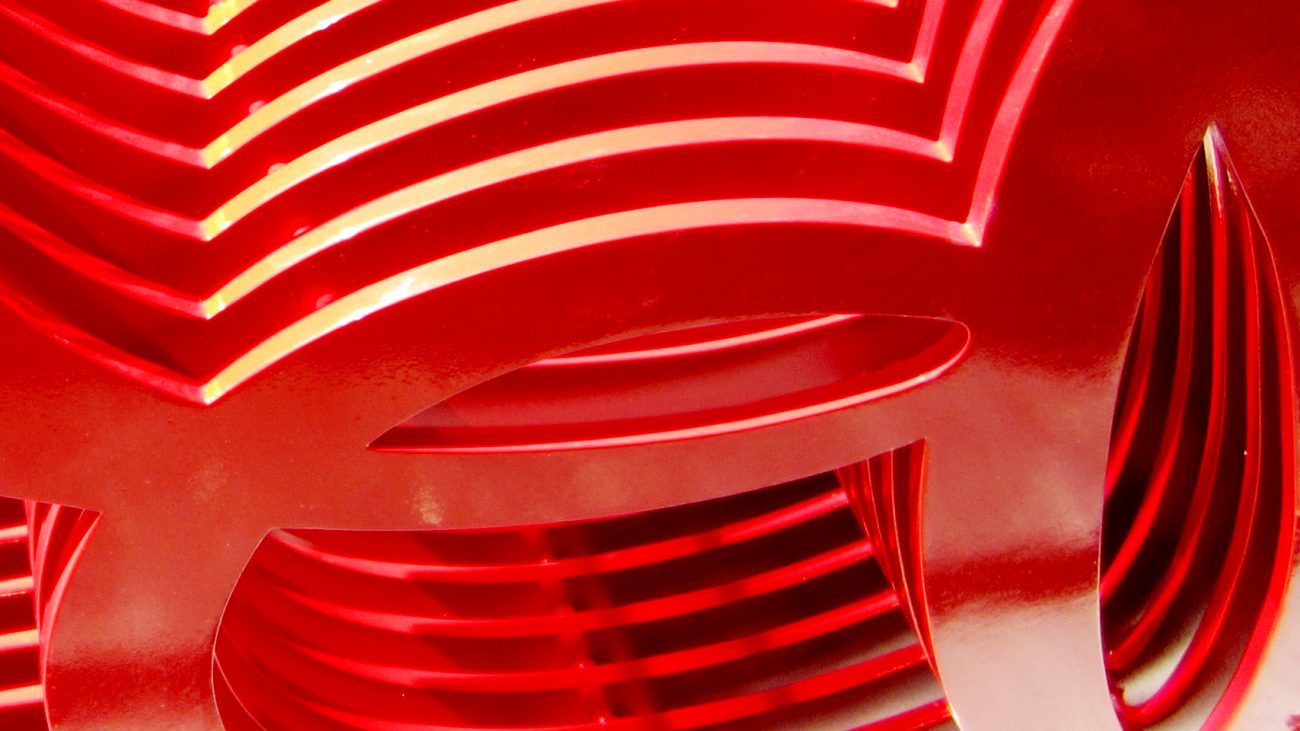
sb | So this material here spans what years?

jh | It starts in 85 and goes through to 88 or so. I was designing for, like, six clubs at one time, which is quite wacky because they were all competing against each other. You know what I mean? But they all said, no, we want you to do it. After that the work was more client-driven. In the early 90s we started out own fashion label, Bancusi. But we’re always struggling. I think you have to get over that hump and be a bigger business turning over 5 million or so. We were always tight, you know.

sb | That would have been a difficult period because of the tariffs and the whole manufacturing sector was in decline…

jh | Yeah. But at the time, we were just doing one day at a time and just spontaneously creating. It was a family thing. When my brother William, who had done sculpture at RMIT and modelling in Tokyo, came back and started the clothing aspect of Bancusi, whilst I always did the graphics. Will and I even got into Vogue because there was an article on ‘brothers in fashion’. When we were doing the Bancusi, we moved into 94 Flinders Street, a building where photographers and artists worked. We had a whole floor and built bedrooms on stilts.

sb | You’re talking about the era when people could rent a big factory space and just stick a caravan in the corner…

jh | Yeah, actually we bought a floatation tank. There were lots of rumours and gossip, you know, about us love and peace people would go in a float tank with three people and do what you do. People would be coming in to work at 9am, but because I’d be out late at night at clubs I’d be asleep in the float tank for a couple of hours. Crazy times.

Various flyers and press ads for Subterrain. Design by awwfad.
Sketch and press ad for Checkpoint Charlie. Design by awwfad.

sb | So is all your work print-based?

jh | Yes, it was all print and very fast turnaround. Very ephemeral. I would go to the printers at 4pm on a Friday and they’d turn it around. They knew I was coming. Then I’d be going around to all the clubs all night, which was great fun. At 3am I’d go to talk to the club owners and discuss the ideas, laugh and have a drink. Then I’d go off and design it overnight sometimes. I then got my own copy proof (bromide) camera, I just went into a studio that I used to work for and from, you know, 5 PM till 8 AM, and I work all night. Sometimes there was no real checking with the client because we had talked about it a couple of times and evolved the idea that way.

sb | What you’re describing there is a very informal relationship you’ve got with your clients. Was there ever a time when it went wrong?

jh | No. Not really. The biggest thing that went wrong one day was that we left a date off. So we had to go through and just do it with the date stamp. Damn. When I worked for various advertising agencies, I had a pet hate that they’d make a false deadline. I’d sometimes work really hard to get that deadline. And I remember one time I went into this guy’s office days or a week later, and the artwork was just still sitting on his desk…

sb | And what about your local contemporaries in design. Did you know Robert Pearce?

jh | Yes. He was at Swinburne with me, but 2 years ahead. But then, then I think what happened, we became major competition – a bit of a, shall we say, a ‘love hate’ relationship there. Probably less love more hate at times.

Self Portrait by Jonathan Hannon. Beat Newspaper Covers and Lunacy club flyer. Design by awwfad.
Original finished art (mechanicals) for Inflation club flyers and press ads.

sb | And working during this time also bridged a lot of technological change.

jh | Yes, even sending artwork off was tricky. In those days we started working on computers using those big discs. Those big clunky huge PLI cartridges. I went to, Ego, down in South Melbourne. You could hear them starting up, a very loud spinning. Sounded like a jet plane. And they cost almost $200 – for a few meg. Now you just email it off. It’s just phenomenal. I mean, people don’t get it. The process is so much easier.

sb | In my conversations with your design colleague Lin Tobias, she saw the evolution of the Macintosh as quite a turning point. She never really embraced the Mac, and that pointed towards her beginning to leave the industry and create her own artwork. So what made you leave graphic design?

It was my move down here (Phillip Island) that made me change. I had some great clients up in Melbourne who trusted me and knew I’d deliver. So I moved down here. I was studying to use the Mac in Melbourne, which I loved. It was a bit daunting for me, I must admit. Back then you could just press the wrong button and you’d lose everything…

sb | Looking across the entire collection of work, there’s a certain light-hearted-ness…

It’s not really taking itself terribly seriously, is it? No. It just catches people’s eyes. Whether you’re selling a spark plug or a drink or a night out, it doesn’t matter what you’re selling. Once you made them smile, they’re interested. We were also operating in a bit of a pre-copyright era. Yeah.

sb | Just on cusp of that. Yes.

In some ways this work could have only been from this period. You know? There are piles of elements there you just couldn’t do now. I agree.

Jonathan Hannon and his awwfad design archive, Cowes.
Full page press ads for Inflation nightclub. Design by awwfad.

sb | What about the typography for this work?

Well, there’s quite a lot of hand-drawn scripts and so forth. It wasn’t just artistic intention, it was also because it was just too hard to get stuff typeset at that particular time. It’d take a while because you had to spec it up and everything. I never concerned myself about the size I got them to set it to, because I knew that it could be enlarged or reduced to fit. I got some big sheets of graphics. Various bits and pieces. I’d sometimes splatter it with white using a toothbrush. And then splatter that with black.

sb | What about the actual the actual identities of the clubs? Were they pre-existing?

Yes. The one for Inflation was. So was Subterrain – but I made it better by putting just that little arrow. Pointing down below because that’s where the club was. Not everybody saw it, but some saw it and through it was clever. I remember that it was one of those nights, working all night and I just saw the subterranean logo and I just cut a little triangle of white paper and stuck it down, it was really simple. Almost like the FedEx logo…

This text is an edited extract from a longer interview with Jonathan Hannon in February 2023.
You may also enjoy another project centred on Melbourne’s club scene in the 1980s – Radical Utopias from the rmit Design Archives and rmit Gallery.

Brophy_01-scaled.jpg

Australian Graphic Design B Sides: Philip Brophy

I recall the first time I read something that suggested that graphic design had its own intrinsic heartbeat. It was 1990. Unlikely titled Stuffing, the publication was unassuming – simply photocopied in black and white and stapled. But the texts offered a rare cultural reading of graphic design, making connections into the worlds of music, art, film and pop culture. And to my absolute delight this gem had been produced in Melbourne.

The significance of Stuffing was reinforced a year later when one of its essays by Keith Robertson, Starting from Zero, ended up as the primary text in Issue 19 of Emigré (1991). The originator of the series (Stuffed, Stuffing and ReStuff) is Philip Brophy – a figure whose creative interests experience span art, music, film and writing amongst others. Writing forcefully from the edges of graphic design at a time when critique was rare, makes him one of the more interesting and unapologetic observers from this period. I sat down with Philip to discuss the series and a whole lot more.

sb | We’re talking here about the series of publications: Stuffed Logos (1988) showed your lettering sketches for bands like The Sports, Huxton Creepers, The Dugites, Jo Jo Zep and the Falcons, as well as music hubs like the Seaview Ballroom, Missing Link Records and Augogo Records; Stuffed Alphabets (1988) critiqued the typography of monograms and logos; Stuffing (1990) centres on graphics (with texts on Post-punk, Edward Ruscha and Saul Bass). They all show that, underneath your own ‘doodling’ and ‘scribbling’ as you describe it, there was a very solid investigation with intellectual rigour. During that period there were not many people writing on graphic design with that intellectual engagement…

pb | I think probably there are two ways of looking at it. One is as you said, but the other is that I’m probably not any of those things. I’m not actually a graphic designer. I do stuff that ends up looking like it is graphically designed, but it’s almost like being a non-musician but then actually doing music. It was a kind of nerdiness because that’s what I spent my money on, records. And still to this day, I still buy records based on the record covers kind of thing. So, it’s still an important kind of, like, thing for me. I guess what I’m trying to just say is that for whatever reason, the whole thing about just being intellectual was always a pleasurable, fun, exciting and engaging thing to do. And when I was writing I just did it. Still to this day, I write without fear. I think people just need to loosen up and write whatever the fucking thought is in their head. It’s just an idea, it’s not going to bite you. I call it ‘material writing’. If you’re writing about a design object, write about everything you can see about that object. Don’t fucking tell me about society. Don’t fucking tell me about this, that, and the next thing all abstract. It’s got to be in the frame. And whatever idea you have has to be kind of inspired by something in the frame. Don’t bring your baggage to the image. Just fucking write what is there.

Stuffing Art = Graphics (1990)
edited by Philip Brophy and Ian Robertson. Design by Ian Robertson. This issue offered a dense taxonomy of post-punk design and culture.
Stuffed Alphabets (1988)
edited and designed
by Philip Brophy

sb | Stuffed is a humble production. It is photocopied and stapled together in a utilitarian, low-budget way. The perfect voice for that material.
 

pb | Yes, and all the artwork is hand-drawn. It was only probably around the mid 90s when I started running Freehand 10. I would draw it on paper, scan it and then kind of vector draw it. But no matter how much I tried I just couldn’t do it. I had this spontaneous drawing and no matter what I did on the screen, it just looked too ordered. It’s been interesting in the past ten years or so to see the revival of the hand-drawn hand letterform. The only problem is that it’s become the equivalent to what the whale poster was in the 1980s. It’s cheesy. It’s so rank, even though it is technically beautiful to look at. But where the hell is the idea? There is no idea.
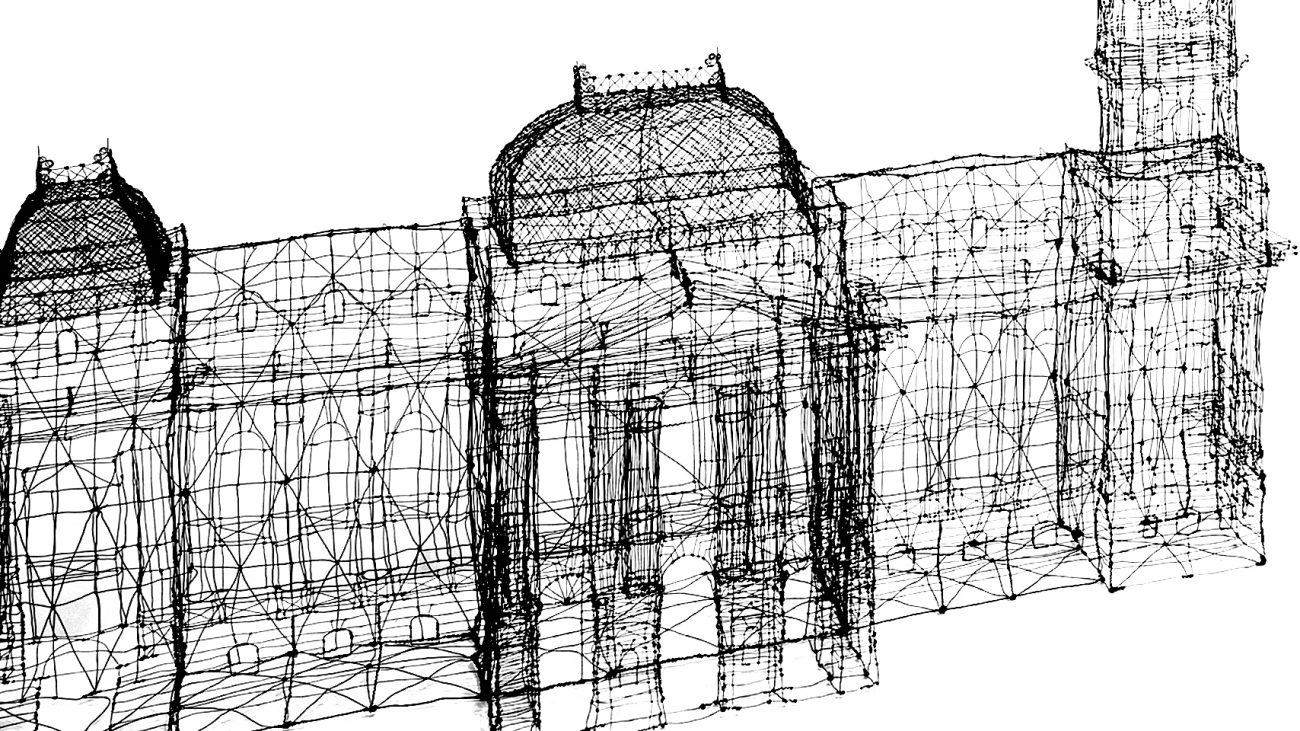
 

sb | Stuffed Graphics is absolutely fascinating. And you were very kind to Peter Saville, I must say.
 

pb | At one point Peter Saville had a link to that essay from Stuffing. When Saville and (Malcolm) Garrett found out about that article, they were over the moon because no one was writing critique about that design work back then. It’s that thing where someone’s doing something but no one’s really appreciating what they’ve done. I think it’s because these probably more get bought by music people rather than design people, because a lot of the designs aren’t that great. You’re looking at them thinking it’s kind of an artifact.
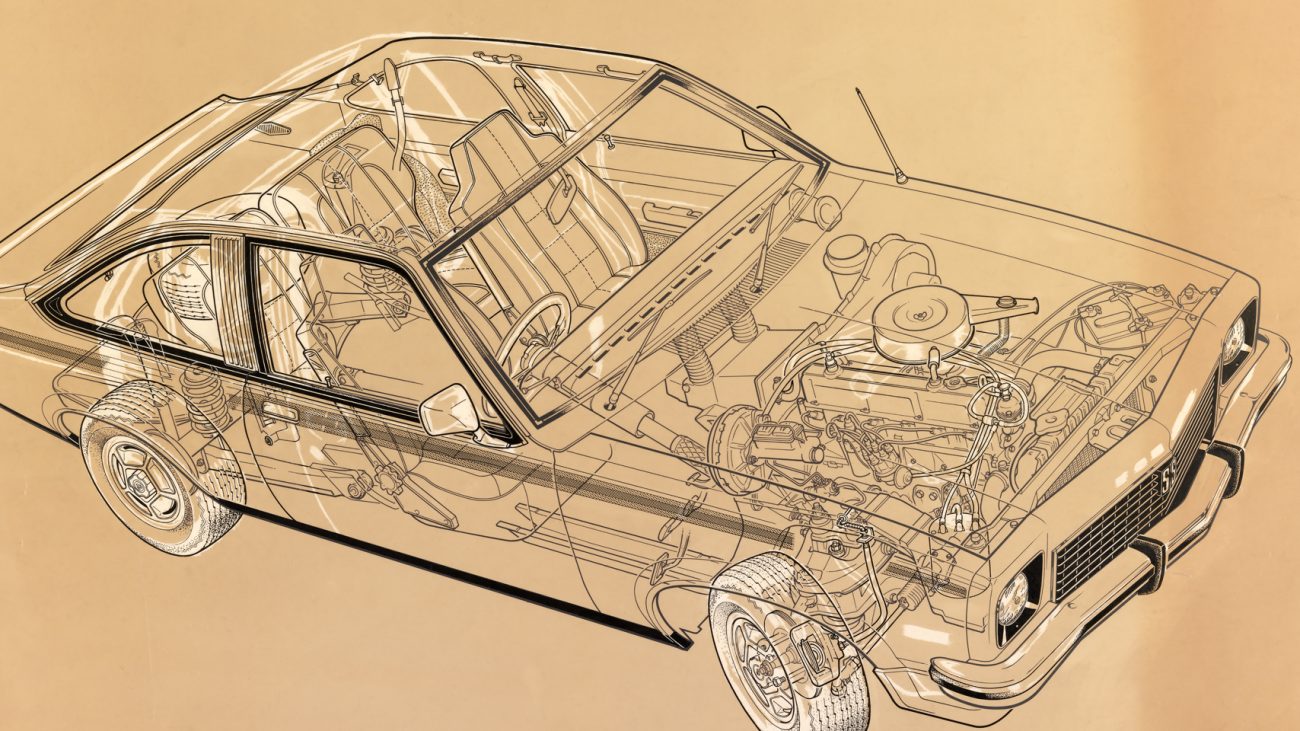
 

sb | Stuffed Graphics was a fluent but lone voice. Why do you think there was nobody within graphic design writing about this?

pb | Because they’re just caught up with the mechanics of doing the job. The designer of Stuffing, Ian (Robertson), was caught up with surviving as a professional designer and yet he managed to write a thorough piece on Saul Bass. But then again, Ian came to graphic design not from an industrial kind of training perspective. He trained in fine art and specialised in screen printing. He did a whole series of posters in the mid 1970s with the collective Redback Graphics. He was really into design, but he was a fine artist. This is where, unfortunately, the whole thing is completely shifted since that period. There’s no longer a generation of graphic designers that are informed by that kind of art school knowledge. It’s all completely professionalised.
 

Stuffed Logos (1988)
edited and designed by Philip Brophy, showing early iterations of logos for bands (The Sports), venues (Seaview Ballroom) and Mushroom Records.

sb | What made you decide to leave the field of graphic design?

pb | The most fundamental of these shift was when marketing took over for me. Because the minute you have someone else coming in who has no visual sensibility, no visual training or awareness of art history behind them and is essentially thinking, how can I get this product to market?

A very simple thing nudged me out of graphic design in 1980, or maybe even 1981, so very early. And that was when I did the Mushroom Records logo. In an hour and a half, I whipped up about ten different mushroom logos and took them down to (Michael) Gadinski. The manager of Jo Jo Zepp (and the Falcons) had got me to do their logo, because he wanted Jo Jo Zepp to look a bit new. I was doing this logo for these dudes, at the age of 18 or 19 or something, and so just did it, right? The manager says Gadinski is going to give you a call, as if it’s a big fucking deal. He calls and says I want you to give me a really cheap price on this logo, which in the end was $150 for what is now a famous logo, which even to me at that time, I thought, that’s a fucking lot of money, I just fucking doodle these things.

Then he said, you’ll give this one to me cheap, right, but I’m going to put, like, really fucking expensive kind of jobs your way, right? And so I said, yeah, okay. And to me, it’s just still a laugh. I can’t believe I’m sitting in this office because I hate the music, and pretending I’ve got a serious investment in considering anything that’s happening there in front of me. And so then I get a phone call from this guy, Lee Simon, one of those 70s rock style presenters. And they were like, ‘Hey Phil…’ they talk like they were in Los Angeles. ‘Hey, Phil, Mike put me onto you’. And he says, I really like your stuff for Mushroom. We’re starting up a fantastic new radio station. It’s going to be called Eon FM, and we want you to do the logo for us. And I said, okay. He says, ‘Why don’t you rock on down to the station and we’ll rap about it’. I go, okay, sure, thanks for the details. I hang up and I never fucking went. And that was it. There’s no way I’m going to fucking enter that domain.

Left: The eventual logo figure for EON FM – which Brophy did not design.

Right: The Mushroom Records logo designed by Brophy.

sb | Yes, that EON FM logo was full of machismo…

pb | Yes, it was like a kind of a muscle-bound, Grecian, bogan, shithead, footballer, jock with fucking wings. Like Icarus with a guitar for a cock. That’s before they became Triple M then. The thing is that those f’orks in the road’ are presented to everyone at continual points, right? And I could have gone down that one. But even if I had gone down that one, there’s no way I would have fucking lasted there, you know what I mean? If you look at 70s Australian design – like Peter’s Ice Cream or Paul’s Billabong – just everything about it was so fucking ugly, personally and aesthetically. And of course, now I can look back on that stuff and see that it’s got some character even though it’s still ugly. History allows you to just re-evaluate everything. Maybe I was a young, self-centred narcissistic with an inflated sense of politics, but I decided that I wasn’t going to do that shit. I don’t judge anyone who ended up doing that kind of thing. It’s just not for me.

sb | Were you looking for further afield in your influences? Because I would have thought you’d be looking to figures like people like Barney Bubbles…

pb | No one even knew the name didn’t exist. That was the great thing about record covers, it was one of those areas where people were doing creative design. They weren’t doing art. That was the really important thing. These days, record covers are so boring because they’re ‘artistic.’ They’re not even designed.

sb | How much of this is due to a change in the design process?

pb | Yes, the software pre-decides all that stuff anyway. So they’re not even thinking, should I make it into Square on Instagram? They already fucking decided that for you. You did nothing. Whatever photo you’re taking with your phone, it’s vertical or horizontal, but it’s now square. No one’s deciding anything. You’re pulling down menus and you, oh, my god, I feel so creative. It’s like Sunday painting gone mad.
 
I think of the graphic designers operating from the late 70s into the mid 80s – by the time dance music and club culture comes along, record covers were still very important. Yet the actual design fee for the record covers was nowhere near as big as if they did a job for a high street boutique or franchise, so they then shifted into that. Like Me Company, they all diversified to survive as studios with overheads. My stuff was developed anarchically. I didn’t have fucking pressures on me. I’m not trying to discount my own work, but once you go into those bigger platforms, say if I theoretically worked on that Eon FM logo, maybe I could have done really interesting things. Or not. But we’ll never know.

This text is an edited extract from a longer interview with Philip Brophy in January 2022.

Writings_13Point_Header-1-scaled.jpg

13pt: Thirteen Typographic Tales

writer Stephen Banham published Meanjin 73.2 (2014)

Back in 1991 a friend of mine who had no formal design training had found work in the then-burgeoning desktop publishing industry. Knowing very little about typefaces, he then set out to develop his own way of ‘learning on the job’. His idea was simple – to work his way through the font menu systematically with each job. So that as a new project came in, he would simply scroll down to the next font on the menu and use it. The next job he worked on he would use the font under that and so on. A logo set in Aachen would lead to the next being in Abadi MT, Akzidenz Grotesk to American typewriter and so on. He is currently at University Roman.

looks just like us.

One bookshop that has slipped awat from our streetscape is the McGills Bookshop. You may have even been in one. And you may have seen their corporate identity and thought nothing of it. But the McGills logo was in fact a rare occurance of an odd phenomena known as ‘Typographic Onomatopoeia’. This occurs when a typeface is chosen because its name happens to match the name of the company it represents. In the case of McGills Bookstore they chose the classic Letraset script Gillies.

taking the point

The English type designer Stanley Morison (1889-1967) is most known for his contribution to the design of Times, a typeface specifically designed for the newspaper of the same name. But it almost never happened. When asked by the Manager of The Times, William Lints-Smith whether he would join the paper as a typographic advisor, Morison’s acceptance was conditional, stipulating that he would only take on the job ‘if you take the full point out after the paper’s name….’. The full point was promptly omitted from The Times masthead and so began a new age of typefaces customised for specific publications.

Other near refusals can be used very cleverly indeed.

In late 1958, the Swiss designer Ernst Bettler was approached by the pharmaceutical manufacturer Pfafferli+Huber AG to design a running set of posters celebrating the company’s 50th birthday. He was already aware of reports concerning P+H’s involvement in tests carried out on prisoners in concentration camps less than 15 years before, and when the telephone call came, was going to tell the would-be client to ‘go to hell’. Instead he formulated another strategy. He accepted the job (offending a lot of his left-leaning colleagues) and set about designing the set of posters. Knowing that these posters were going to be seen in hundreds of sites as a set of four, each of the posters was presented individually, deemed inoffensive and given approval. The first of these posters featured a clowning child’s body forming a shape similar to an ‘N’. ‘Kopfschmerzen?’ (Headache) asks the second of the posters, depicting a woman’s head bowed inside an ‘A’ shaped triangle of her forearms. In the third, the contortions of an old man formed the letter ‘Z’ whilst the last one in the set depicted a the silhouetted profile of a defiant woman (forming the letter ‘I’). When pasted up across the city, the previously concealed result was dramatic. The public response was equally instantaneous – the posters were torn down, the local newspaper offices were buried in letters of complaint and demands were made for some of the company managers to be stand trial. Unfortunately this whole story was revealed soon after as a hoax.

The fusion of form and meaning makes typography a powerful tool for subversion.

Between 2000 and 2003, a series of chance sightings of odd typographic gluey messages occurred across vacant Melbourne shopfronts – ‘1995 if you’re lucky’, ‘Going down fast, 1997-2000’ and the largest of them all ‘2 years at most. 1991-93’. It transpired that a signage installer has been casting his own prediction as to the duration of the new businesses. Written in the very glue that once held up their signs, these mysterious forecasts were only revealed once the business has collapsed and signage removed. It is then that the general public, and more specifically the business owners, were exposed to these ominous forecasts. Perhaps the most haunting aspect is their sheer accuracy. In the case of Collingwood-based belt manufacturer Leathercraft, the glue forecasts drawn under their signage simply stated ‘1992-98’. The factory had indeed opened in 1992 and lasted six hard years until 1998 – when the company went into liquidation, forced out of their traditional markets by cheaper imports and higher labour costs. As Tony Larsden, the managing director of the now defunct Leathercraft described “I couldn’t believe it when we pulled the sign off. At first we thought it was just grafitti until we realised that it was written with the old glue. Seeing those dates scribbled up there was like some sort of spooky premonition – like looking at your own tombstone”.

Some type terrifies. Some inspires.

Roman Kingsley from Adelaide has been a bird trainer since 1978, regularly competing in national bird competitions and recently struck on an interestingly typographic idea when on holiday in Perth. “I was looking up at the sky and saw a plane skywriting these puffs of white smoke in the sky. Those cute little puffs reminded me of Bert and Busby, my two main prize winning birds. I thought, my birds could do that, spell words out, with a bit of training. After all, flying in a V formation every winter comes natural to them. It’s only a short jump from that to get them to spell out other letters and then maybe entire words”. Conventional skywriting can only appear in one place at one time, whereas Kingsley’s birds can assemble and reassemble at any point spelling different things out anywhere else. Despite some teething issues (trying to get the birds to spell was difficult) it took three months for Kingsley to train the birds to spell out a word in the first trial. “We definitely prefer our advertising clients to have straight letters in their name. The birds don’t like too many curves”. But Kingsley remains ambitious. His client wishlist featuring such companies such as ANZ, AAMI, NIKE and IKEA – ­all clearly showing a strong inclination for the linear, peaked letterform.

But visual tracing of typography has been investigated before.

In 1963 a series of experiments were conducted to compare the human and mechanical energies spent when typists used manual and the newly developed electric typewriters. One of these experiments was kine-cyclographic, whereby tiny lights were attached to the middle finger knuckle of the typist as (she) typed out the pangram ‘The quick brown fox jumps over the lazy dog’. These were then filmed and turned into a simple motion diagram. One of the young English secretarial typists involved in these early experiments, Veronica Lascelles, was so taken by the findings, published in T.L Kinsey’s Audio-Typing and Electric Typewriters (1964), that she decided to privately continue these experiments. Between 1968–1984 she has tested the human energy required for the operation of modern computers, morse code transmitters, fax machines and several types of cameras. In 1989 Lascelles took Kinsey’s tests a step further, applying kinetic mapping to everything from a hot metal compositor’s type tray right through to the keypad of an auto-teller machine. The outcomes offer possibilities of visually representing words through the physical movement required to make them. Or as Lascelles puts it “It’s the human element that is often forgotten first. A sense that it’s a performance. Like a dance”.1

Type from nature.

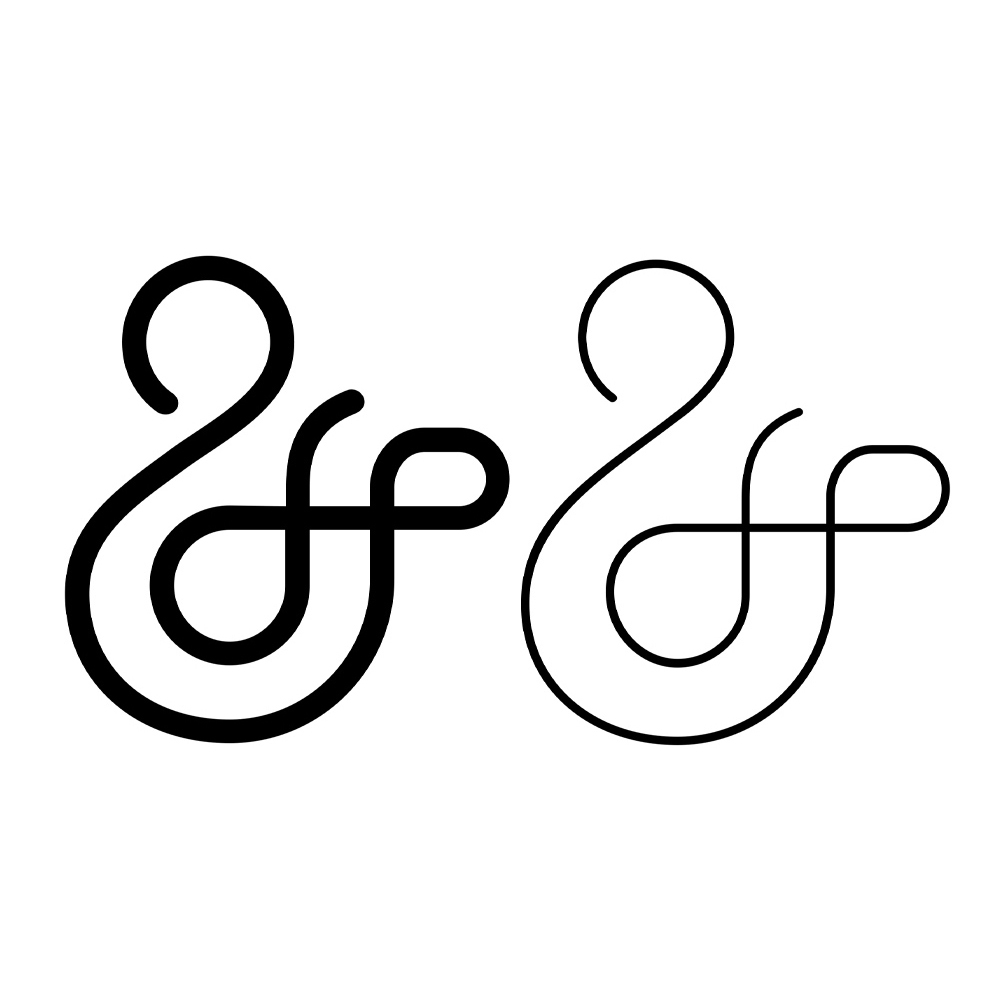
It was in 1962 in an attic in the Smithsonian Institution in Washington DC, where Kjell Sandved was balancing high on a ladder, surrounded by drawers and boxes full of exotic butterflies. Upon opening an old cigar box, there he found something extraordinary woven into the tapestry of the butterfly’s wing: a silvery, gleaming letter ‘F’. ‘I looked under the microscope at this miniature design,” Sandved recalls, “It reminded me of how the ancient scribes lovingly embellished letters in bibles and illuminated manuscripts with human and animal forms.” Intrigued, he photographed the letter and hung the print next to his desk where he admired it for over a year. Then one day it dawned on him, that having found one letter of the alphabet, there might be others flying around. Inspired by this curiosity, he decided to follow this curiosity and collect the entire alphabet on the wings of butterflies. In order to avoid the eventual fading that occurs on butterfly wing specimens when handled by human hands, he realised that he would have to photograph the butterflies live in nature and do so without killing them. Loaded with customised photographic equipment, Sandved embarked upon a quest that would span more than 30 countries. Year after year, letter by letter, Sandved found and photographed these elusive letters on the wings of butterflies. Finally after 24 years he had found the entire alphabet. The most difficult of all was the asymmetrical ampersand ‘&’. He found only one.2

Type from God.

In Paul Auster’s New York Trilogy, the private detective Quinn (aka Paul Auster) is intrigued by the seemingly meandering daily wanderings of his target (Boston Stillman). It is only after he carefully follows and maps the movements of Stillman that Quinn discovers the route his target is taking is actually typographic – spelling out the phrase ‘The Tower of Babel’ using the block grid system of Manhattan. The resulting map of Stillmans travels is a strangely familiar pixel-like rendering of type, combining both topography and typography.

Even the Mormons created their own alphabet.

The Deseret Alphabet emerged from the Church of Jesus Christ of Latter-day Saints with the stated intent to help simplify the process of learning and spelling of the English language. Unfortunately, church members never fully accepted the new alphabet. Some critics have also claimed that this alphabet was intended to cloak Mormon writings from outside view. Soon after the death of its creator Brigham Young in 1877, resources and funding for the project came to an end. Recently included in the unicode system, the letter forms was last seen adopted by the comical republic of Molossia as its national language.

Upper case, lower case, pencil case.

Pencil case manufacturer, Spellit has recently had to adjust the design of its school pencil-case range to accommodate the ever-growing length of children’s names. When the company first brought out the cases, whereby children would spell out their name cutting out supplied cardboard letters, names were shorter on average by two letters. ‘The 1970s were the days of John, David and Sally’ remarked the Spellit’s distributor manager, Barry Sandilands. With popular names now growing to eight letters or more, the pencil-cases simply had to be made longer. ‘Increasingly, the cases have to spell out names like Sebastian, Annabelle, Harrison, Alexander, Mohammed, Isabelle and the like. It’s not that pencils are getting longer, the names are’.  

The full stop.

The only person known to have used typography to kill themselves was the young Hollywood actress Peg Entwhistle.  On September 18, 1932, after a night of depressive heavy drinking following several casting rejections, Peg scratched her way up the Griffith Park mountain slope to the monolithic Hollywood sign where she took off her coat and folded it neatly. She placed it, along with her purse, at the base of the maintenance ladder which led up the letter ‘H’. She then climbed up the workman’s ladder on the back of the 45 foot letterform and dived head first onto the ground killing herself instantly. Peg was only 24 years old. Shortly after her death a letter from the Beverly Hills Playhouse arrived at her home. It was an offer for her to star in their next production, playing a young girl who commits suicide.

The fool stop.

On 1 April 1977 The Guardian published a special supplement honouring the tenth anniversary of the independence of San Seriffe, a small island republic located in the Indian Ocean. A series of articles affectionately described the geography and culture of this obscure nation. It was said that San Seriffe consisted of two islands: Upper Caisse and Lower Caisse. Its capital was Bodoni, and its ruler was General Pica. Included in the supplement were paid advertisements by prominent companies. For instance, Texaco offered the public the chance to win a two week trip to Cocobanana Beach in San Seriffe, and Kodak asked readers to send in their favourite pictures from vacations spent there. The Guardian’s phones rang off the hook all day with readers eager for more information about this idyllic island.

1. The text for this article is based on T.L Kinsey’s Audio-Typing and Electric Typewriters (1964) as well as a telephone interview with Veronica Lascelles on 30 October 2003.

2. This text is based on the writings of Barbara Bedette and a phone interview with Kjell Sandved in Washington DC (4, October 2003).

MixedBusiness_Header-scaled.jpg

Mixed Business

Mixed Business: Integrating value systems with graphic design practice is a research study that focusses upon a selection of design practitioners whose studio structures have been specifically configured to bring their own value systems into their everyday design practice. This study was undertaken to address a common lament within the design community and explores viable alternative practice models, using direct discussions and case studies.

PARTICIPANTS IN THE STUDY

Claude Benzrihem

One of the principal designers in the Paris-based studio, Therese Troika, Claude has been practicing for over twenty years. The work of the Therese Troika studio is primarily culturally and community-based working, mainly for Museums, Institutes and arts organisations.

Tony Credland

Credland has been heavily involved in political activism for many years. He is perhaps best known in design circles as the designer behind Cactus network, producing Cactus and the Feeding Squirrels to the Nuts project. At the time of interview he was working in London as a designer for New Scientist Magazine.

Pascal Bejean

Pascal Bejean is one of the principal designers at the multi-faceted Paris-based studio, Labomatic as well as with the studio’s fine art practice arm, Ultralab. His Labomatic work is mainly based around the music and contemporary art worlds. He is the publisher and designer of Bulldozer magazine.

Peter Bilâk

Bilak’s Hague-based practice, Typoteque, includes a variety of  roles such as  graphic designer, writer, educator, font designer and contributor to the Dutch graphic design magazine DotDotDot.

Jonathan Barnbrook

Best known as the London type designer behind Virus foundry, Barnbrook has set up a practice that encompasses many spheres of design including music, film, contemporary art and advertising. He has been a major contributor to the Canadian-based culture jamming publication, Adbusters.

Studio Anybody

Made up of five designers, the Melbourne-based Studio Anybody’s practice is driven by research, collaboration and an active role in design education. Their work, centred around the fields of fashion, publishing and art, includes work for the Melbourne International Fashion Festival and Mooks.

Sîan Cook

A designer and educator, Cook lectures in graphic design at Kingston University, London. Along with her colleague Teal Triggs, she is noted for the formulation of Women’s Design Research Unit (WD+RU), an organisation for promoting the role of women in the design industry.

Paul Elliman

Once again based in London, Paul Elliman’s involvement in the world of graphic design is a complex one. As an academic, writer and designer, Elliman undertakes research projects on a regular basis. His design work has included work for Critical Mass, Wired magazine and the AIGA amongst others.

Inkahoots

The Brisbane-based graphic design studio is the product of an earlier series of co-operatives based around politics and social justice. Primarily working with mainly government and arts clientele, Inkahoots prides itself on being both independent and politically active.

Jan Van Toorn

An internationally renown design academic, Van Toorn centred his concerns around the role and responsibilities of the designer within wider media and culture. He was involved in activities including seminars, forums, workshops and is a former director of the Jan Van Eyke Academy. He passed away in 2020.

AGDA Victoria

As representatives of the Australian Graphic Design Association, John Frostell, Helen Watts, Max Robinson & Jody Fenn span many generations and professional experiences. Their contribution offered a localised industrial perspective.

Top: Expletive sampler designed by Jonathan Barnbrook.

Works by (1) Paul Elliman
(2) Studio Anybody (3) Jan Van Toorn (4) Paul Elliman

you become a ‘temporary expert’ on projects, and try to find out as much as you can

the importance of direct involvement with project content

A fundamental factor in the alignment of values to professional practice is direct involvement, particularly contributing the authoring of content. With this direct involvement comes a more thorough understanding of content, especially when the designer is introduced early in the process. The shifting of the designer’s role from that of latter-stage visualiser of information to a more fundamentally engaged role has been very much at the centre of recent debates and is pertinent to this study.

In the case of English graphic designer, Tony Credland, who brings to his work a direct involvement in politics and social justice, the alignment is paramount, “Politics and design overlap. I don’t just work as a political graphic designer, I work as an activist, doing video covers, brochures, leaflets  etc as well as training people, sharing skills. Then there’s the teaching. And that is usually done within a political framework, suggesting different ways of working and discussing social responsibility’.”

As well as minimising any potential ethical conflicts, direct involvement throughout a project allows for greater capacity for the designer to more readily identify with the end-user of the information. It makes the process of the project more enjoyable and satisfying. When English designer and educator Paul Elliman was asked to design for the cycling activist group Critical Mass he immediately saw the possibilities of a pre-existing involvement with the group. “I cycle with Critical Mass– it’s an easy ‘client’, actually it’s anonymous, there is no client. I mean I’m as much a part of Critical Mass as anyone is, you know, it’s not even an organisation – it’s referred to as an organised coincidence. Anyway, the work I made is a straight-forward ‘call to arms’ that stems directly from a position of believing in Critical Mass and believing that it has an impact on the place where I live.”  Elliman continues “… I think that my contribution works on a number of levels. You can appreciate it as graphic design, for example. But also I wanted to convey a more sensitive, less aggressive dimension to Critical Mass, perhaps in contrast to how the group is usually portrayed. The recycling thing for example – I mean obviously a prime concern of the city cyclist is a healthier, safer, more sustainable living environment. Then there’s the A-Z map by Phyllis Pearsall, which makes another set of connections, brings in other values. It’s about the city, discreet parts of the city, the ways in which our use of the city is organised, prescribed. In the end I hope the graphic design itself does a number of things as well as being chiefly a promo for a pressure group. And I felt like I was collaborating with Phyllis Pearsall, or that we, if I can say that, were working somewhat collaboratively with our city. My wife, Ingrid, once told me that I seemed to be generating a black hole within the cosmic slop of graphic design. She was referring to things like the Critical Mass project, or my Bits typeface for example. I think she meant that while I could probably operate as a graphic designer in a reasonably sophisticated way – you know, with skills that an agency might employ, for example – here I am deploying this practice in another space. A kind of inversion of that particular representational space. So, for example, in some ways I’m taking design values that I may not even believe in, and using them for something that I do believe in because I find the contradiction in some ways necessary or useful. I think that it goes without saying that I do these things because of certain values and beliefs that I have with regards to living in the city. Mediating, or simply coming to terms with this relationship through what we know, love and hate, as graphic design.”

(involvement) takes you away from discussing ‘oh, this typeface, that typeface’

Given the opportunity for the designer to have direct contact, knowledge of and empathy with, the end user is a clear advantage as it provides insights that assist the generation of both content and form. London-based graphic designer and educator Sîan Cook says of her personal and professional involvement in safe sex hiv-aids education programmes, “The organisation I am working for at the moment, that I do pro-Bono work for at the moment, is an organisation called ‘Gay Men fighting aids’. It’s a volunteer organisation, they have a very small staff. They do a lot of advertising campaigns and it all comes from volunteer groups. I will come in as part of a group to work on a campaign but I am an equal member of that group. I’m the designer so at the end of the day, I will have to realise the work but the ideas might not be mine. It might be another member’s idea and we’ll then sit down and discuss how it will be realised. It is a far more democratic way of working. These people don’t have to have a trade qualification in design to have a visual literacy.  I find that really stimulating because it takes you away from discussing ‘oh, this typeface, that typeface’. Sometimes I would suggest something, saying ‘well, I think this imagery would work’ and they would say ‘what!? no gay man would look at that!’. It’s really heartening, you’ve got the audience there. To me that’s a lot more exciting way of working, rather than in a remote, detached sort of way”.

Although involvement throughout a project may sound straightforward, the designer must firstly ensure that their values fit the project itself – and that is where pre-existing involvement or disposition plays a defining role. When the French design group, Therese Troika was approached to design the signage system for a new community centre in an underprivileged Paris suburb, their immediate reaction was to investigate the communities who were to use this facility and make sure that the naming of the centre and everything it represented was culturally appropriate.

The social-cultural centre, situated in Villeneuve-la -Garenne, serves a community of primarily North African immigrants. It is a welcoming place for people of all ages living in the local area. A variety of associations operate from the centre as do a myriad of social activities – cooking lessons for young mothers, French language classes, information forums to educate people about their civic rights and the possibilities of employment and family-based activities. The Centre itself is part of a larger and more ambitious cultural project – the rehabilitation of the city district of ‘La Caravelle’ in Villeneuve la garenne. The area features buildings originally designed in the sixties by the functionalist architect M. Dubuisson. Comprising of some four thousand apartments, it was one of the biggest housing blocks in Europe and was later rehabilitated by the French architect, Roland Castro.

The first issue for Therese Troika was the naming of the Centre. The local council had named the centre ‘The New World’. This unfortunate title conjured up inappropriate and even potentially provocative notions of alienation, foreignness and above all, a western colonial arrogance. As Claude Benzrihem, member of Therese Troika, put it “Along with the architect Isabelle Crosnier, we worked from the very beginning of the housing architecture – the choice of colours, choice of furniture and materials. Our teamwork was heavily based upon regular encounters with the users of this place’. It is through this level of engagement that produced an overall idea as to what was needed.  “Our project was based upon the idea of modularity, flexibility and evolution. The signage itself is like a toolbox, a free composition of modules –images, texts, coloured spaces for expression, and possibility to leave temporary messages. The actual signage structures themselves are metal frames, in a variety of sizes from A6 to A3 and larger, freely composed around each other. The organisation of the messages is composed like a game : A is for Association, B is for Book, C is for Chats, D is for Dance, etc. The visual memory has as much meaning as the memory of the text. Many people who are coming here don’t speak French very well and so can find language-based orientation systems difficult.”

Direct involvement is strongest in community and culturally based projects – developing the relationship from working for the community to working with the community. As Tony Credland recalls his experience working in the political activist communities “Whilst at the Jan Van Eyke Academy, I met with Gerald Paris-Clavel and worked with Ne Pas Plier (Do not bend) in Paris for a month. The way they did work was very inspiring. They approached the work by listening to other communities; they didn’t try to impose their design on people. Design was just a way of communication rather than a process unto itself. They would employ design for political ends and use it in very innovative ways, but very specific to Paris”.

Involvement can also help to focus the designer’s input away from the aesthetic to the functional – opening up possibilities of using process and content as primary ingedients. When English graphic designer and educator Sîan Cook described the formation of work of the Womens Design Research Unit (WD+RU) with colleague Teal Triggs she noted “Not much of what we do at WD+RU is actually graphics output per se, a lot of our work involves giving talks, writing occasional articles for the design press, hosting discussions, talking to people and providing book lists, references and the like. It’s not a concrete outcome. We started in 1994 to promote the role of women in design. That situation has got a lot better since that time. We had the unfortunate problem of everything that we did being judged on its design values and that wasn’t the point. It was as though we had to be shit-hot designers to prove that women are good designers. What we really wanted to do was to change how people valued design – so it wasn’t about how good things looked but more about how they worked. So we deliberately went against that, not trying to make things look flash. There’s no reason why women can’t do that as well as men, but are we interested? Do we want to compete on that level? No. We’re informed by many core feminist principles – the idea of working with a community or not being overly concerned about aesthetics but more about whether they work”.

Conventional modes of graphic design practice have emerged from a prevailing modernist mindset that positions the role of the designer as rational and detached. Reflecting on an earlier point in her career as a graphic designer, the design educator Katherine McCoy notes “During that year (1968), the designers I worked with, save one notable exception, were remarkably disinterested in the social upheavals taking place around us. Vietnam was escalating with body counts touted on every evening newscast; the New Left rioted before the Democratic National Convention in Chicago; Martin Luther King and Robert Kennedy were assassinated; and Detroit was still smoking from its riots just down the street from our office. Yet hardly a word was spoken on these subjects. We were encouraged to wear white lab coats, perhaps so the messy external environment would not contaminate our surgically clean detachment. These white lab coats make an excellent metaphor for the apolitical designer, cherishing the myth of universal value-free design. They suggest that design is a clinical process akin to chemistry, scientifically pure and neutral. Yet Lawrence and Oppenheimer and a thousand more examples teach us that even chemists and physicists must have a contextual view of their work in the social/political world around them”. As English type designer Jonathan Barnbrook adds to this sentiment in his own words: “Lots of designers would say that we are transparent messengers of the client’s message. I’ve never been into that myself. I’m certainly not a subscriber to the ‘Crystal Goblet Theory’.

the natural state of values

Many practitioners including, Paul Elliman, saw the process of engaging with content as completely natural — “I think I would always find it difficult being a graphic designer in situations where I wasn’t somehow integrally involved. My first practical experience was at City Limits, a London listings magazine with a clear political agenda, and one that I felt I agreed with. I think its important to know that I became interested in graphic design after joining this magazine, and not through any prior, specifically graphic design-based interests. And then my second job – and here I was much more involved as a designer – was at Wire magazine. But here again, having had a strong interest in jazz-related music through my teens, I was already a reader of Wire, and to become the magazine’s designer was perfect for me at that time. But when I finished at Wire, I found it very difficult to see myself as a ‘designer for hire.’ Whereas other magazine designers tend to move from one publication to another. That’s how they identify themselves. They might not have such a partisan attachment to the content of any particular magazine. They might just want to design magazines. OK, that’s an over-simplification, but what I’m saying is that I felt able to engage with Wire magazine on a number of levels, a commitment that wouldn’t be easily repeated elsewhere.  For that reason – although it’s not the only reason- the idea of continuing to be a magazine designer, or even a designer, didn’t necessarily appeal to me, and still doesn’t particularly.”

Although every project is different in its nature, scope, audience and message, each offers its own opportunities for learning about a particular field of knowledge. The designer’s capacity to learn is constantly expanded, broadening beyond design. Hague-based designer Peter Bilâk has been a long time exponent of perpetually learning from projects. This was reflected in his comments on the difference between self-initiated and client-led projects; “Perhaps it would be too simplistic to say that there are no differences because there are differences. Sometimes I wouldn’t think about working on a project until you get asked. So client-initiated projects are a very integral part. It opens you up to new things whereas self-initiated projects are things that you want to do, want to explore. I just got a commission in France, working in the city of Norsee and I had to come and do the research because I didn’t know anything about it. Being on-board this project you have to find out. I like design in this way, because you become a ‘temporary expert’ on projects, You try to find out as much as you can or experience”.

Bilâk continues “In every project there has to be something which makes you want to do it. That something can be a potential, you know, working with people you want to work with, it could be things that I always wanted to discover but not having time to do it myself. I don’t know whether I could describe that my value is… this. Sometimes I deliberately take on a difficult project because it forces me to go further. We have been working with Stuart Bailey on a book on Dutch design, and there have been many books written on Dutch design and we know that people say ‘yeah, yeah, another book on Dutch design’ but we took it on because we think that it can be presented in a different way. We have some ideas as to how to do it. We know it is very difficult. But we still want to try. This afternoon I am going to Germany because I am working for the Holocaust Museum in Stuttgart. When I was first approached I think that in principle it sounds like a worthy thing, I like to share my energies for a good thing. Sometimes I accept a project because it is technologically innovating. I am working on a project which is only the programming but I thought I would benefit from working with people who know a lot more about it than I do. So there is always different things. I like to see design as the natural result of the research. It’s so obviously connected, so you can say of course it looks like that because of the research that I have made”.

To remove this aura of inaccessibility, to explain these things, to say that this is the result of a whole machinery, how a country functions, this was the intention

When Peter Bilâk was posed with the challenge of putting on an exhibition of Dutch graphic design, his values of criticality were manifest in a solution that stripped back the aesthetic exterior of the graphic design artefact, exposing an underlying system – the commission itself. “This is a promotional card for an exhibition of Dutch Design I curated at the Graphic Design Biennale in Brno two years ago. The thing was how to present graphic design to the public and it was a very good exercise for me because I could get involved and organise it from the start. Presenting graphic design in a gallery space is forced and rarely works but we had to work with it. Taking the design from another country and presenting it somewhere else is also very difficult because often people just romanticise and present it as a set of beautiful images, you don’t understand why they were made or how. To remove this aura of inaccessibility, to explain these things, to say that this is the result of a whole machinery, how a country functions, this was the intention. For this exhibition project, I would make a selection of people I was interested in and then try to work out the client they are working for – because they play a crucial role. I talked to these clients, collected all the briefs, if any, and presented these with the work, in some cases stating that there was no formal brief. And then you see that the work is the result of something. To draw this it would be a triangle – the designer, the commissioner and the public. For me it is about showing what you doing, taking away those ideas of exclusivity.”

Through involvement and research throughout projects, many designers create a most fertile environment for developing one’s own vocabulary. Melbourne-based Studio Anybody insist on having their investigations and research couched within their valued collaborative structure. From their experience this results in their work being recognised through process rather than ‘style’. “…By research or by bringing into it your values, can create an alternative mode of practice. I think it is quite evident in the work itself that our values lie in that, that there is a feel , a personal feel to it. Sometimes people will say ‘oh, that’s seems very studio anybody’, they tend not to say ‘oh, that looks like studio anybody’ because maybe it’s not house style. …I think it would be a particular type of client that would be interested in that. By its very nature, self-initiated work is very personal and I think that graphic design, by its very nature, is problem-solving for someone else. Though I do think that a lot of our work uses both. We have some clients that may want it to be more a case of graphic design – of graphic elements, less the conceptual side. We’ve worked a lot with arts organisations and generally it works but I know that one or two case they have said ‘We don’t want you to make the artwork, we want you to represent the artwork’. And they don’t see how you can do that with some sort of conceptual image. It has to be base graphic design. Our success, particularly in the earlier years, was that our work was open-ended. And which has now been brought into the client work. I don’t think you should make a distinction”.

These ‘expanded languages’ can emerge out of long-term investigations into topics not readily related to graphic design. Paul Elliman refers to this in relation to a very specific project, the design of the American Institute of Graphic Arts (aiga) conference. This project drew together and applied his previous research into test patterns. “I think any relationship between what I believe in and what my work is, has both intensified and become more subtle. I hope so anyway. Through a combination of having a bit more experience and becoming curious about finding ways to engage with projects that I may initially think I have less in common with. The work I did for the aiga is one example. I was asked to design material for one of their conferences and found that my interest in test patterns could be taken further through this project. …Test patterns are beautiful, quite abstract, can seem very aesthetic, and even, as a kind of ‘pseudo-neutral’ form, appear to have little to do with one’s values or beliefs in any socially concerned way. But it shouldn’t take much to find the significance of addressing the material nature of our technology through a set of highly engineered diagnostic tools. It should also go without saying that any exploration of the codes and languages of your work will have political and social implications. Not to over-read the project, of course”.

finding your own values

In an industry where graphic designers tenuously align their own ‘success’ by proxy – through either the financial worth or creative kudos of their clients. A longer-term strategy may be to create differentiation through articulating one’s own values. Clear positions on integrity, philosophy or politics has the defining effect of attracting appropriate clients whilst repelling inappropriate ones. This closer relationship deepens an empathetic working process and approach.

In large cosmopiltan hubs like Paris, practices such as Theres Trioka are more readily sustained and given opportunities to clearly define their values and position – “When we write the method of working, we always explain how we want to work. And some people when they see this, they say farewell. But at least everybody knows where they stand.

We don’t like to be like the butcher delivering meat on a bicycle. We prefer to work with them not for them. When we can’t do that, then we are not useful.”

At the very beginning we started doing culturally based projects. In that time, when we started in the 1980s, it was easier to do that. There were a lot of commissions. We worked on a large museum commission and then we started getting more jobs like that. Until we got to a stage where we could say no to the jobs we didn’t want to do. Our work was mainly navigational and signage-based. If we fit with the project, then we do the project. If it fits then we get involved, part of the team, so we are inside and we think with them. We don’t like to be like the butcher delivering meat on a bicycle. We prefer to work with them not for them. When we can’t do that, then we are not useful.”

For Studio Anybody, involvement by clients is one way of ensuring a ‘fit’ in their collaborative approach “If you say that you’re going to collaborate with clients, it’s a two-way thing. It’s not necessarily a process that everybody wants to get involved in. A lot of people just want the job done, they don’t want to be confronted by questions, generate content – they just want results’. This ultimately suggests that the defining their client base is a positive thing ‘In a good way the clients that don’t want to participate in our process don’t.” Just as this process can reinforce sympathetic clients, it can also limit the range of clients willing to be collaborators. Jason Evans acknowledges this impact, “The other repercussion, which can be fairly negative, is that some people say of us ‘They’re too conceptual, they’re too precious. They wouldn’t be right for us, they do art projects. In a commercial environment our process can scare many people away’. Once this negotiation with the client is resolved, Studio Anybody projects can then progress with a strengthened consensus.”

Brisbane-based studio Inkahoots are unapologetic about their politics and its capacity to either encourage or repel potential clients. One of the more light-hearted instances of this is recounted by Inkahoots co-founder Robyn McDonald “Just recently we did the exhibition stand for the Crime and Misconduct Commission, they’re a government body who have taken over from the CJC, the Criminal Justice Commission. When you apply to be a preferred supplier, they check up on police records. Jason and I both have been attending marches for years and therefore both have special branch files. We thought that this would be an interesting result but they didn’t knock us back. I think it is perhaps because people are more broadminded in those positions these days – maybe if we were still in the Bjelke Petersen era we would have found it harder.”

Rather than be put off by such experiences, Inkahoots actively seek opportunities through which their political views can be aired “We’ve just made steps towards forming a strategic alliance with the Queensland Council of Social Services (QCOSS) who are the peak body working for a better deal for underprivileged people in our society, working towards social justice. They also have a program where they were advocating people in business to work in partnership with charitable organisations and foundations. So we would do our design work for half the normal rate but we do all of their work – they desperately need re-branding. That way the work will be promoted to their client base, all the community organisations working in the social sector in Queensland. So that helps to put our name out. QCOSS put out a newsletter about four times a year and they said ‘oh, you could do a column on design tips’. We said ‘well, actually, we would rather talk about Inkahoot’s political view on current events’. A forum where we can put forward our political viewpoint (incomplete sentence). This strategy is one way of staying viable so we don’t have to go out of our community, cultural and government sector.”

In Tony Credland’s experience, following political beliefs into practice empowers the individual to avoid potential clients who may not respect those beliefs “There’s no client out there who will come to you wanting a political edge unless they are going to use it as a selling drive or marketing ploy. Some magazines have come to me saying ‘There’s this free magazine and we want a bit of politics in there, can you do something for it’. But it’s going to be covered in adverts and that’s just there to sell the magazine. Basically it’s just a style magazine and they just want a bit of politics for their content and I don’t want to be part of that process. I don’t have to rely on that form for my politics, I can go and make my own magazine. I don’t need to use somebody else’s magazine to get my politics out. There’s more grassroots ways of getting that content out”.

Value in practice does not only effect who you work for, but also how you work. Paul Elliman’s experience as being a designer who has a clearly more considered but much smaller output has orientated the course of this working life. “It’s somewhat Darwinian in the way that it has forced other strengths to develop. But of course it will have in some ways limited my options. To be honest I’m ok with that because I’m someone who prefers a smaller, more selective output. Without being too precious about it. But rather than churning things out, perhaps spending more time thinking things through, developing interests and themes. I don’t necessarily think that the other ways of working are wrong or bad or anything. I can still admire people in more orthodox studio practices who work faster and produce more. That’s graphic design really and I think that can be fine. For myself I need to take a slower approach and one result of that is a smaller output of work. But then that has led me to find other ways to get by. And these have supported and maybe even extended my thinking. For example, through writing or teaching, which I see as equal parts of what I do – designing, teaching, writing. Although I still feel that the impact of producing less work has, in a formal sense, probably slowed my development. Even though I somehow had an instinct for design from an early age — I was still quite young, about 26, by the time I left Wire and even if I might have looked like a quick developer it was a painful learning curve at the time — but that was a one-off thing and then I chose to drop out of design for a few years before working my way back in from another direction. And I became even more selective about the work that I was taking on. As a result then, I think the development of how I work, formally and conceptually, was slowed by not having a continual output, but then it became something else. So not really a problem’.

One of the most challenging and divisive terms used in a study such as this were the terms ‘commercial’ and ‘non-commercial’. Dispensing with these terms ultimately proved to be a wise one as the practitioners interviewed were not only adamant that a distinction should not be drawn but that the terms themselves inhibited the integration of values into practice. This point became central to the research, significantly influencing the outcomes of my own practice. Scoping out from the narrow confines of one’s own field allows for a greater cross-pollination of skills, ideas and opportunities.

A full set of DotDotDot journals (author collection)

It’s a funny idea, the idea of doing your commercial work during the day and going off and then in the evening doing your nice little designs. You just do your work”.

A strong advocate for a more unified approach is the Slovakian-born, Hague-based designer Peter Bilâk. Reflecting upon his own practice, he noted “It’s a funny idea, the idea of doing your commercial work during the day and going off and then in the evening doing your nice little designs. You just do your work. DotDotDot (magazine) is just as much part of my work as anything else I do. It’s not like I save it for the evenings. In a way I don’t have a project that would be like that. All my living is made by things like this – making books, writing for books, the fonts, organising exhibitions – and all of them, they are commercial because I get paid for it. I mean, DotDotDot  is also for sale so I don’t know when things stop being commercial, or when they start being commercial. I do it because I like to do it and if I can make a living out of it then that’s even better.”

Within a Dutch cultural context, this integrated method of practice is not considered unusual at all. “…But the other thing is that it’s fairly common, it’s not unusual doing this. Our studio is a good example of similar interests getting together. It has obvious advantages to it, why we work like this. Most of my friends are doing the same – combining work with cultural institutions. It’s their work, they like doing it. They participate in the exhibition of the projects. Some of us are also involved in teaching, so having this life with bits of teaching, bits of this, bits of that and that’s your work.”

Like Peter Bilâk, English designer Jonathan Barnbrook views the division of the two forms of projects as problematic “I see the separation of the two as a flawed way of working. In that it’s a separation of the self from the work. It’s important that you contain what you do in the commercial content as well – people come to you for the work that you do so you have to show that. And if you’re never doing the kind of work that you really want to do then they’ll never know that. So just be great in the first place.’. Barnbrook certainly lives his own theory in his work, making a smooth transition from working on a corporate identity project to designing one of his own typefaces in the same day “Both commercial and experimental work are self-initiated. They both come from the self, they’re not separate. The only difference is that you have a time-frame and a brief that you don’t necessarily have on your own projects. It is appropriate for them to co-exist because they are one.”

Some designers construct methods of maintaining their values across the differing natures of a variety of projects. One such strategy is to name the studio’s different pursuits under different titles when in fact they emanate from the same designer. Pascal Bejean describes the process by which Labomatic (the design arm) and Ultralab (the fine art arm) relate to each other – “I don’t think we can think differently in one place to another one, or in Winter or in Summer. Especially since our tools are the same. We work with graphics, graphic design is our artwork. And we try to input our approach in the design of the work. So it is very mixed.”

Claude Benzrihem of Therese Troika puts it more poetically – “The projects are considered to be the same. Because the commercial work we do is the work we choose to do. It’s all one whole thing. Sometimes we are not well paid but we choose what present we want to give and to whom we want to give it. (Yet) we pay the same amount of attention to all of them (the projects) …. But that’s a choice. We try to make it the most sincere it can be”.

Barnbrook’s design of Public Offering led to the experimental typeface Expletive.

The conventional view of self-initiated work within a studio is that of as free space that allows for the exploration of ideas to be tested and then steadily introduced, either entirely or diluted, into the commercial arena. This flow from the ‘experimental’ to the ‘commercial’, need not be one-way. Values could be brought into both the ‘experimental’ and ‘commercial’ realms, allowing the flow of ideas to be two-way. Jonathan Barnbrook is a strong believer in this approach “Because of the nature of the kind of commercial work we get, it can often lead on to private work. So it ends up being the other way. We have generated two or three typefaces. Quite extreme typefaces, that were triggered by a commercial project. So it’s not that the self-initiated projects are the breeding ground for the commercial work, it can be the other way around. It was the Public Offerings book, out of which came Expletive Script. But I suppose it depends on the nature of the job – an art catalogue rather than a company report for instance”

the breadth of value systems

This study has highlighted the sheer breadth of values held by designers. Some values were socio-politically orientated (Inkahoots or Tony Credland), some are process-based (Studio Anybody) whilst others are aesthetic (Pascal Bejean) or humanist (Therese Troika or Jonathan Barnbrook). Yet this range of values were all bound through criticality and self-reflection. More varied however were their ways of implementing these values into practice – some such as Jonathan Barnbrook found it easier to make a ‘macro’ description – “The fundamental thing about design is trying to make the world a better place with it – whatever form that takes. It should be the basis of all work. Those things ARE quite simple in the end. Design should improve society. The desire to be a good human being cannot be separated from doing graphic design’.

Therese Troika has no difficulty in articulating the value system by which they practice – “Sincerity is the one thing we always want to develop. That would be our value in one word’. They emphasised its importance by its absence in much contemporary French graphic design ‘If you have been to Palais de Tokyo here in Paris, M/M did the signage. It’s completely trash. I don’t like it very much because it is for an institution. It was as if the institution had taken ecstasy. It is not the role of the institution. It’s a sign of the times. The bookshop is like a cage. The books are inside; the prices are written in a scribble. It’s a parody of what happened in the artists’ workshops in the 1970’s or a building site only with security. Everything is apparent. It’s ostentatious and only for a very rich audience. It’s the look of no look. It is not sincere”.

Personalising beliefs is a way of contributing not only to the practice but a more universal code of conduct. Claude Benzrihem describes the process of reducing the big political picture down to a more manageable human scale – “I think, in the street, with my neighbour, at home, this is where my fight is – it is the personal quality, my gift. If I can smile to my neighbour then it’s OK – it’s the little things that you can catch. I don’t believe anymore in these big party-political things…There are more little things now that we can be interested in”..

Who gets to bring their values into practice?

Whilst the casual observer may consider bringing values into the workplace as ‘lucky’, this ‘fortunate position’ can be the result of many things – specific experiences, opportunities and exposure to pre-existing studio models. Bejean makes reference to this when reflecting on the earlier period of Labomatic – “The first obvious model we had in mind was Tomato. The fact that they are many people, they are working together and they share an office, money and resources and if one is off, the work can come from the other ones. I wouldn’t think of any other one, we couldn’t be Grapus. We are so not into social issues. They used to work for rich commissioners in order to be able to work for poor commissioners. These kinds of people do not come to us and so we cannot say that we work for them. But we are fighting against the capitalistic society everyday because we suffer from it. We hate that. However we would not refuse to work for a group like Warner because if you do that you just stop working. I am not ready to make that sacrifice. I don’t think it will change things to operate from the inside. I am thinking more about the people at the end of the chain – the people who buy the CD. If one of the 100,000 people has some flash of something, an awareness or questioning, it’s a victory. And that’s how I started, as one of them – looking at the record sleeves and thinking ‘…hmm, this could be done better, or different’. That is the battle I am trying to fight”.

In the instance of Inkahoots the constraints of their values created some problems in their studio’s development – As Robyn McDonald reflected “Our major failing over the years has been lack of marketing – perhaps a hangover from thinking that marketing is a dirty word. I’m way over that. It needn’t be if you do it right, if you’re focused and you are clear about your goals.”

For Paul Elliman’s, this evolutionary process required constant inputs, exposures and references; “My values and beliefs have obviously been also developed for better or for worse through a kind of saturation in art, design, visual languages, literature and their impact on the world. It’s definitely not a a ready-to-wear solution that I would have had when I was younger. I would have found it difficult to imagine how I would proceed as someone who had certain desires and beliefs as a young person. The more obvious logic suggests that I am of a certain socialist tendency and that I am going to go and work for a certain publication that represents that – that’s an obvious political focus. My experience with City Limits, which as I said before, had a stated political agenda, was quite an eye-opener for me because I experienced a lot of middle-class rebellion and selfishness in that particular job. I think I learned something about myself when I worked for that magazine, I began to intuitively formulate ideas about how beliefs and values could be maintained in the work”.  

Other practitioners, such as Peter Bilâk, see perpetual learning this as ‘ventilating’ the process of design with continual cultural and intellectual input. This offers the possibility of gauging one’s work in relation to the prevailing cultural environment and reminds us that values are subject to constant change – “To me this was like the story of Jan Tschichold who, being so young and bright, wrote his manifesto that was very influential and when he was older he was the harshest critic of his own work. So he saw that his limit was in his twenties but he lived into his seventies doing some of the most classical work”.

Works by (1) Therese Troika (2) Sîan Cook (3) Labomatic

Can anybody bring their values into design practice?

Whereas a ‘manifesto’ infers an evangelical dogma, the bringing of one’s own values into practice is viewed as very much a decision of the individual. Commenting on her experiences of this, Sîan Cook notes “I think it is up to the individual. I don’t think anybody should impose their value systems on anybody else. I think everybody should inform themselves, then they have the information to make the decision – whether to work for client A or whatever. What I really didn’t like about the ‘First Things First Manifesto’ was that after it came out, everybody was trying to score points off each other – ah, well, you signed it but you worked for blah. I thought – no. You don’t know everybody’s personal circumstances, I mean – we all have to live don’t we?”. This approach avoids self-righteousness. Perhaps this lack of dogma could be attributed to the maturity of the practitioners themselves. After all, a begrudged self-sacrifice to your own values is ultimately counter-productive. Cook adds “It’s a quality of life thing definitely. That’s certainly why I do the pro-bono work I do. Not in a martyred sort of way”. Possibly the most concise description of this choice comes from Tony Credland who noted “I wouldn’t be harsh on anybody who was doing it. I can completely understand why they are doing it and I think it’s an internal passion that you believe in and you want to do and if you’ve got the opportunity to do it then try, experiment”.

Values within practice were seen as so natural that it was impossible for them to imagine not doing it. Tony Credland, went further with this point “You don’t sit in the middle as a graphic designer. If you’re working as a graphic designer and you think that you’re not being political then you’re fooling yourself. Just to work as a graphic designer means you are working for a political system”.

By not practicing one’s own values, design work will instead invested with somebody else’s values. In conventional graphic design, these are usually the values of the client. Dutch educator and designer, Jan Van Toorn, demands a more politically aware and socially engaged value in graphic design – “To begin with, communication designers should understand that a political stand does not express itself in direct political action alone. But also in the way that designers deal with social conditions and cultural conventions, including disciplinary dogmas and norms in regard to viewers and readers”.

the empowerment of value systems

Another influential factor in aligning one’s beliefs with profession is empowerment. Having been involved with publications such as the culture-jamming Adbusters, Jonathan Barnbrook implies that this design knowledge can be gainfully employed “Because you’re connected with graphic design, you’re connected with the way that people send out messages, the way that people twist language, twist media”. Barnbrook adds “An interesting thing about working as a designer in a western society is the need to evolve visual language all the time. That is very much a politically motivated thing – a new visual language has to come along every so often to give the sense of newness”. This constant need for newness, promoting an engineered obsolescence, only helps to reinforce graphic design’s compliance to a consumerist economy.Jason Grant states in Inkahoots’ manifesto-like Public x Private, “We hear designers proclaim that they don’t care about or respect politics. Fair enough, but we don’t need to care about or respect politics to acknowledge that the political processes we are inextricably part of, directly or indirectly shape our reality. There is no such thing as an apolitical stance. Not even for a designer. To ignore this is a very political stance”.

Placing values within practice encourages greater flexibility in the studio structure. One of those is the scale of the business itself. Jonathan Barnbrook remarked “I want freedom, not restriction. Most studios, it’s all about income and overheads. Not here. The whole thing – flashy reception and all that, it’s all a distraction. I don’t think design really needs all that”. Many studios, such as Inkahoots, have taken conscious steps to ensure a structure that supports and protects their values,“If we look at the studio processes, one main point is that we don’t have a hierarchical structure. We don’t have an art director, senior designer, junior designer etc. We all comment on the work, we all critique the work so everybody has their say and is open to constructive criticism. It hasn’t always been that way. Some younger designers have felt threatened by this process I suppose. I feel that there is no place for that insecurity if you want to be a strong designer. We are also all paid the same wage. When I was flirting with my options, one of the factors was a personal one. I’m a parent of a ten-year-old boy and my partner all these years has always supported me with my relatively low wage and I felt it was time I contributed more income to my family. When I pressed on with my partners support, I wanted to keep the same wage as everybody else, but we have made a much greater effort towards financial sustainability and I now have use of a company car. That makes me (now in my early forties) feel like I am achieving what I want to do: working with great people, working with my principles but also contributing a little bit more to my family. So that’s the only thing that has changed.’

One designer who experienced great challenges in aligning values with practice, Tony Credland, sees the formation of a formal studio structure as a threat to one’s values.“That is the reason why I haven’t started up a studio. I have seen this happen to friends. The last thing I would want to do is to lose that independent work. I also know that if I ran my own studio I would want to do it really well which would mean working 24 hours a day to the exclusion of anything else. Friends in Holland who have started up studios have been able to survive on very large cultural institutional jobs, that blur the line between whether it is commerce or not. In London it just wouldn’t work but I think that in another city it could be possible”.  This highlights the delicate nature of this balance – attracting enough appropriate commissions for viable practice whilst not being so economically reliant as to threaten the articulation of your own values.

the important role of naivety

Curiously, naivety plays a role in many of the experiences of the interviewees. When Jonathan Barnbrook reflected on establishing his own studio after graduating from college “I think it was about not really thinking about what you were doing, what the ramifications were of deciding to do certain things. Being stupid in a way. Just not worrying. Just doing what you want to do. The worst thing that could happen is that you would go back to what you were doing before”. A ‘blind faith’ in a values-based practice sustaining itself helped others, such as Peter Bilâk; “Even until now, I don’t quite understand how I get projects into the studio. When I finish something, something else comes along. I never search for work. When I started of course the fear was that I would not have enough work because I am unable to actively look for it – I don’t know how. So my thing is that I hope that I will be approached to do something that I want to do, or you do your own things. When I was leaving Studio Dumbar, I was safely leaving with one big project in mind, knowing that when I finish I would have this one big project for half a year to keep me busy. The day I left the studio, the project was cancelled. I thought, ‘Great, now what will I do?’. But instead some other projects emerged and because I was free I could do something else. So there were very little plans, more like a series of chances and accidents. Probably that makes it more interesting as well. The important thing is to not worry too much about it otherwise you get stuck. What you worry about, won’t happen. People are used to the idea that you need to work very hard to achieve something. I believe it should be easy, and until now everything works better than I could ever plan it. Of course there was a lot of time investment into projects, but because I like doing it – it seems effortless. And quite naturally, I have plans for projects, deadlines for books and plans for type design. I remember when I was a student and having this admiration for people who had this clarity of vision, they knew exactly where they were going. Later I started appreciating things, like values, doing things responsibly and projects that make you good. You really don’t care how it is going to look, it’s more important that you get a good feeling from it, it is probably leading you somewhere. Without being too spiritual, I think it is important to be comfortable with your Karma, and take things one at a time. That’s why I don’t understand young designers who have these coffee table biographies, talking about their work. It’s still young. It doesn’t feel like the right time to discuss it because it lacks perspective. If you do something innovative, you don’t know how it is seen from afar. I always believe that my work will always get better [laughter]. What would you do with a book about my own work, should I quit working and retire?”

When describing the formation of Inkahoots, Robyn McDonald said that the current studio model is the result of steady refinement over time – “Inkahoots has been an organic evolution into who we are now. It hasn’t felt like an overly conscious process. I set up a group called Black Banana with friends and it lasted a year and never paid wages, it was just friends coming together. After that I set up Inkahoots with some colleagues and really focussed on making a screen-printing collective work. We were all left-wingers working towards social justice and enabling community access to a means of affordable visual communication. Screen-printing in 1990 was such a medium. The people using these facilities were peace activists, local green groups, unions, artists and community members generally. So that was the beginning, the foundation of Inkahoots – an artist-run collective working towards social justice for the community in a very grassroots way. Coming from that starting point, it hasn’t felt peculiar to be where we are now”. This fragile naivety offers an intriguing element in the evolution of value-integrated design practice – and may suggest a possible remedy to an often ‘over-professionalised’ industry of graphic design.

The profile of the designer and the capacity to bring values into practice creates a curious cause and effect relationship – Is it easier to exercise values if you’re famous and working on prestigious projects or is such notoriety a result of bringing values into practice?  Tony Credland argues that individual reputation rewards particular designers with projects through which their values can be expressed. “Well, I read a lot of Jan Van Toorn’s texts where he is talking about facilitating change from within the system and I think fine, that’s ok for a lot of well known graphic designers but it’s not reality for somebody like me. I really don’t have the opportunity to choose the jobs I get, I have to fight for any work that comes my way. When I get a job like New Scientist, I can’t stuff it up by putting in the politics too strongly. Everybody in the office knows my politics, I don’t believe in hiding it, that’s for sure. I’ll lay it on the table and they can take it or leave it. At the end of the day, I can’t bring all this theoretical politics about bringing it into your work because it’s just not possible in those kinds of circumstances, in a weekly magazine that goes very fast. I can’t choose pictures the same way Jan Van Toorn can in a big project that spans months. I really respect that sort of work. I would love to be in that position but I’m not, and doubt if I will be, so I need to find other areas to be a political designer”. Even within the activist community, Credland sees that there is clear benefit to having a high profile. “Gerald Paris Clavel in Paris has done well through all that work with Grapus, the position he is in now means being asked to do decent jobs, and to turn down a few. They have such a reputation, high profile that people come to them specifically for political work and their ideas. In my situation I cannot see this possibility but can still work well at a local level”.

Similar frustrations are not uncommon in younger designers, particularly students. Sîan Cook recalls an experience with one of her design students at the Ravensbourne College of Design (UK) “The danger is that students begin to resent the visiting designers who talk about their socially-aware work. It’s that preachy tone that can stimulate that response sometimes – ‘you know, it’s all very well for you to be doing that ethical stuff but I’m in no position to do that”. Yet this argument can also be flipped – that meaningful and powerful work aligned to a value system leads to notoriety. In many cases this study has highlighted that the outcome of highly respected designers being distinctive, critical, even subversive, is because they choose to integrate their own value systems.

different cultures, different approaches

Cultural specificity also plays a role in who gets to bring their personal values into design work – in particular the difference between England and Holland. Jan Van Toorn, Dutch designer and educator explains “In Holland we have had tolerance as a form of social control, that’s not contradictory, it goes together. Along with this sense of tolerance is the idea of the common good that you have to support. Not that you produce only for yourself, you take care of the other, of the common good. In the early part of this century there was this tendency everywhere in the world and certainly in Europe … that you should take care of the social situation. That the public institution is there to take care of the common good. So then when you produce stamps, you produce architecture, the furniture, the costumes of the people, it should demonstrate that there is a better world. The world can be better by the products and the way you behave”.  

Hague-based designer, Peter Bilâk agrees “Maybe it is a Dutch thing, that you get involved with the project so early on, that you help to define it and then it basically becomes your own thing. Even if I work for cultural institutions, they have some big idea about what they want to do, you don’t receive a brief of anything, it takes much longer than that, it helps to define it, takes some time to find the funding and then at the end I do the work. So it really blurs the boundaries, whether it is a commission or whether it is self-initiated. Basically you put so much of yourself into it, because of the specific climate here you can get lots of funding for culture. So you can invest more time in cultural work. Very often they work with artists who have their projects and you will be a partner in the project. Usually it starts off quite informally and ends up being official, quite a big thing. The idea of graphic design being subsidised is very much promoted.  There are so many cultural bodies which support art, culture and design that it is much more easy to exist because you can get funding for things which normally would not exist.”

Although the international design media often portrays the Netherlands as a design utopia, the Dutch Government are nevertheless singular in their support of design. Slovakian-born Bilâk is appreciative of this situation “…That’s one of the reasons why I came here to work rather than staying in either Prague or Slovakia, which sometimes I think would make more sense because there is much more to do there, probably more important work. Here I can indulge myself doing cool things. If I was to work at home (Slovakia), I would be spending my time explaining what I am doing and then have little energy left to actually do some work. I would be justifying every single little thing, you know, why this is important, and here you get this sort of foundation on which you can build something of your own without having to explain what design is about. But of course it is changing, Holland is just as commercial as anywhere else, the market influence is everywhere, the bigger studios are under commercial pressures with market-driven ideas”.

Even the seemingly negative aspects of place can be used to advantage when brining in values. Throughout the tyrannical reign of Premier Joh Bjelke-Petersen in Queensland spawned a left-wing revolt, out of which Inkahoots emerged. This fight fuelled the specific values that informed the practice.

a fine balance

Aligning values into everyday practice presents a delicate balance – between the pragmatic (the daily necessity of rent, wages and other overheads) and more idealistic visions of social or political change. Barnbrook explains, “It should be a balance. Some work is done for money – some work is done for free. If the work is worthwhile, then you should have the space to do it. You shouldn’t be just run by economic factors” says Jonathan Barnbrook when asked about this pivotal point. “…There shouldn’t be a disregard to money however. You run a studio, you pay everybody’s wages”. Barnbrook’s practice is not without contradiction – the combination of left-wing politics with his work with large media multinationals – yet this may simply be a necessary and pragmatic response to the expensive realities of practicing in London.

Bringing values into the workplace is not only subject to everyday financial demands but also by larger patterns of economic activity. Sîan Cook observed that economic downturns gave rise to a corresponding reflexiveness in the design community. During periods of studio ‘down-time’, the opportunity is taken to consider the wider picture of practice such as how much (or how little) meaning it brought into their lives. “Recent economics and the downturn of the design trade has a role to play in this. People often have more time to consider things like their value systems. If you are working in a big design firm and then you’re made redundant, you may begin to question the firm where you thought you would work forever, it might make you think about yourself and the meaning of your job”. Jonathan Barnbrook also sees a clear relationship between economics and values in practice. “Good designers will always do some soul-searching as part of the process of their work anyway. If times are bad, sure, you may have more time but then when times are better you should, because you can afford to”.  Being involved with design education, Sîan Cook took the economic ramifications even further by suggesting that the high cost of education plays a prohibitive role in graduates introducing values and meaning into their design careers. “There’s certainly a lot more awareness now, it’s quite heartening. People are quite happy to work on socially aware jobs but the trouble with the paying education system now is that students leave university with a huge debt. I have a lot of sympathy for the students these days. They have to often be more concerned about trying to get the debt down and have economic stability than going out and ‘saving the world’. The urge is there, so if they had the option, they would much rather do these more meaningful things. But short of changing the funding system, there’s not much one can do about that”.

Responding to the economic repercussions of his relatively small design output, Paul Elliman has turned the situation into an advantage by enabling his values to broaden, enrich and in some cases, finance his practice “… But then that has led me to find other ways to get by. And these have supported and maybe even extended my thinking. For example through writing or teaching which I see as equal parts of what I do – designing, teaching, writing”.

Ultimately, this study offers an air of optimism. Most of the interviewees found that an involvement in design education has provided an important supportive framework for critical practice – and for such designers as Sîan Cook, Paul Elliman, Peter Bilâk and Jan Van Toorn, this multi-faceted support not only funds but allows an opportunity to influence the direction of future generations of designers in bringing their own value systems into their everyday design practices.

napkin sketches of integrating value systems into practice

Napkin Sketches by Jan Van Toorn, Therese Troika, Sîan Cook, Peter Bilâk and Paul Elliman.
Napkin Sketches by Tony Credland, Peter Bilâk, Pascal Bejean, Jonathan Barnbrook and Max Robinson.

This is an edited excerpt from the original research project.

OzHeader-scaled.jpg

How we got to Now:
A Brief Survey of Australian Typography (1983–2023)

Writer Stephen Banham | delivered Keynote Lecture at the 2024 ATypI Conference

Looking across 40 years of Australian typography highlights that, although typefaces are great at expressing the personalities of brands or small communities, it can no longer capture the essence of ever-changing national cultures. But that’s ok.

Australia has a very, very long human history, with arguably the longest surviving culture on earth. Respectfully acknowledging this context, this typographic survey will seem very brief indeed – just a tiny 40 years, from 1983 to 2023. When putting together any historical survey, there is always a temptation to draw a timeline and simply populate it with chronologically ordered content. But that approach would miss the necessary messiness of how these things work – much of the audience tonight would be aware that typographic history operates more like a pinball machine, ideas endlessly bouncing off each other backwards and forwards.

It may be helpful from the outset if I also clarify what this talk is not.

This survey will focus upon mechanically reproducible typefaces, and not lettering. To include the latter would simply not be possible in the limited time allocation. But it will touch upon some of the writings around typefaces as well as the design work itself. This survey will not include every single person who has ever designed a typeface in Australia. Such an exhaustive (or should that be exhausting…) listing can be found courtesy of the all-seeing, all cataloguing Luc Devroyes.

Instead I have chosen to explore the curious tension between typefaces designed by Australians and Australian typefaces. This may appear like I am splitting hairs, but acknowledging this distinction is central to this paper. Typefaces designed by Australians are indeed that – but for those resultant typefaces to somehow seek to reflect a national identity is a whole other thing.

Ampersand (1996)
Stephen Bnaham

In 1996 I wrote what I thought at the time was just a throwaway line – ‘Whenever I read text set in Gill Sans I can’t help but hear the voice of an English narrator reading along with me. Australian graphic designers have a lot to say – we just haven’t got a font to say it in. Yet’. In the 28 years since, this much-quoted statement is something that I’ve often come back to. These are the thoughts of a young designer in search of an identity. A young Australian designer tired of having his international design conference lanyard forever misidentified as Austrian.   

The second most common question I am asked would have to be Is there an Australian typeface?. It’s the best kind of question there is because it has no answer. It’s like a form of utopia – an ideal, a quest rather than an actual destination. Without becoming too ‘zen’ about it all, it is the process of questioning and searching for a sense of identity that is the important part. And you’ll see aspects of this journey in many of the typefaces I show in this presentation. For young Australian designers, the impossible quest for the Australian typeface is a ‘rite of passage’ – a necessary step in understanding not only the relationship between ourselves and typefaces, but also an important lesson in recognizing that most invisible of cultural ingredients – time.

Being a keen gardener, I can’t help but draw a metaphor here. When planting a new garden, the one thing you cannot buy is time. Plants are given the space they need to eventually grow and occupy. This evolution just takes the time that it takes. Nationally identifiable typefaces operate in a similar manner. Excoffon’s Antique Olive, Gill’s Gill Sans or Meidinger’s Helvetica have all acquired the unique ability to be read as cultural shorthand only through their repeated use in a specific place over a very long time.

Prior to the starting point of this brief survey – 1983 – there had been little written about Australian graphic design culture, let alone Australian typography. Although not specifically centred upon typography, Mimmo Cozzolino’s Symbols of Australia, first published in 1980, was a significant and meticulously researched showcase of colonial-era branding, highlighting the xenophobically racist voice of early Australia. And, as is often the case, it took the clear-eyed perspective of a migrant to cast light upon the culture of his adopted home.

It was in that very same year, 1983, that Geoffrey Caban wrote A Fine Line (1983), an excellent general history of Australian ‘commercial art’, a term that was itself entering its twilight. Importantly A Fine Line documented the adoption of international modernism in the 1960s upon what had been a very parochial design profession. It does make mention of some of the earlier Australian designers who had a particular interest in typography, such as Alistair Morrison, but only within a much broader graphic design context.

Unsurprisingly, Australian typeface design has been sculpted by technological developments and bigger, international undercurrents, patterns and trends. Influences within wider graphic design culture – deconstruction, an interest in the vernacular, designer as author, digital anti-mastery etc, can all be mapped upon the continuum of design work coming from Australia.

Like elsewhere across the globe in the mid to late 1980s, Australian typography responded to the paradigm-shifting technology of desktop publishing. Many typefaces created in Australia for earlier technologies such as photo-typesetting were redrawn and re-released into digital form.

The typefaces from Russell Bean’s Type Associates were an instance of this transition from analogue to digital. Perhaps most importantly within the context of this survey, many of his typefaces suggested aspects of Australian life – Billabong, Bouginville, Fremantle, Macquarie etc. Recent echoes of this can be seen in Troy Leinster’s naming of his recent typeface Brisbane – but more on that later.

The economic turbulence of the 1980s led to several short-lived typefaces – sometimes called ‘ghostfaces’. Nevertheless they are part of the overall narrative.

Ansett Caslon (1989–2001), designed by Brian Sadgrove, was part of a larger branding campaign by Campaign Palace when Reg Ansett sold his airline to Sir Peter Abels and Rupert Murdoch. The airline had been initially called just ‘Ansett.’ – the full point lending the single name some visual authority and decisiveness. The word ‘Australia’ was later added to address an international audience. As Sadgrove explained, “Caslon was chosen because it has a simple authority about it, the tt’s could be ligatured well and whole look wasn’t too designery. Pretty much everything ended up kerned and with a full point after it, which in hindsight seems a little 90’s excessive”. The truetype version of Ansett Caslon (designed to run on Mac OS6 no less) features one of the classic hallmarks of a customised typeface – a set of specific brand ligatures. Option Shift A would deliver a perfectly kerned Ans, Option Shift N the ett, Option Shift S the Aus, Option Shift E the tra and Option Shift T the lia. All conveniently located on the keyboard to spell out the word ‘Ansett’. Reflecting on the project, Sadgrove is philosophical about the ultimate demise of the airline only several years later “The original design was all changed before the airline died, so be it…”

Trak (c.1980s) was a display face designed by Alex Stitt and Bruce Weatherhead and drawn by Ian Hawksby. It was part of an identity design project to promote the then new arcade and cinema complex in Toorak, Melbourne. The abbreviation of Toorak to ‘Trak’ by the local ladies inspired the naming. Prints of the typeface were even handed out to the arcade retailers for their own usage. Influenced by the revival of typographic modernity, it channeled Bayer’s Universal, Lubalin’s Avant Garde and Taylor’s Blippo Black. As Stitt admits himself “Modernism was in’. The Trak arcade and cinema eventually fell upon hard times, closing in the early 2000s, and along with it, any trace of the typeface.

More successful and enduring projects do exist. In 1988 Garry Emery (of Emery Vincent Associates) was commissioned to design a bespoke titling typeface for Australia’s New Parliament House. Playfully known by the local design press as Capitalis Senatus 1, the typeface answered the pragmatic demands of the project, whilst subtly referencing the early signage of the colonial era. The result is an amalgam of Trajan, Avant Garde, Futura and Copperplate Gothic. Having been installed nearly four decades ago, the success of Emery’s typeface lies not only in its skilful execution and its avoidance of a laboured ‘Australian-ness’ but its enduring presence within this Australian institution. Emery observed ‘As part of our research, we compiled a dossier showing examples throughout the history of Australian type and analysed what we found, looking for any trends we could identify as somehow Australian. Really, although we would love to have discerned some evidence of a developing vernacular, there was nothing we could identify that was particularly distinctive’.2

left: Capitalis Senatus (1988)
right: Qwerty 1(1991)

By the beginning of the 1990s there were local attempts at addressing the ubiquity of desktop publishing. Qwerty contributed to a larger international interest in cultural vernaculars. In 1992, the second issue of the Qwerty series, The Vernacular Issue explored the existence of a truly Australian typographic expression. Despite its well-intended premise, an early-career reliance on aesthetics ultimately led to a rather contrived and reductive effort to find a ‘national’ typographic persona. This interest had been fuelled by texts such as Lift and Separate published by the Lubalin Centre, the photographic observations of Ed Fella and the typeface that encapsulated this era – Barry Deck’s Template Gothic whose echoes can be seen in Qwerty 4 Recession Issue, set in a typeface based on the glue outlines of storefront signage left after going out of business.

Australian printed type samplers have been relatively rare over the past 40 years, making the tracing of any ‘typographic evolution’ quite challenging. Those few that do exist include the Oblique series by Letterbox and the Recollection typeface produced by Domenic Hofstede and Vincent Chan.

The ‘Vernacular’ era was running in parallel with the undercurrents of deconstruction and the self-taught ‘intuition’ of figures such as David Carson. This wholly imported trend saw the development of smaller independent digital foundries. One of these was Prototype whose 1996 type catalogue Don’t Believe the Hype, presented an assortment of typefaces that clearly took advantage of then-recently-released type-editing software Fontographer, forming an Australian parallel to others such as Andrew Balius’ Garcia Fonts in Spain or Carlos Segura’s T-26 from the US.

As design writer Rick Poynor observed in the Australian issue of Eye “It’s odd, looking at contemporary Australian graphic design, how little it seems to be informed by a strong sense of place”.3 If it is rare in the wider practice of graphic design (with its more extensive toolbox of visual expression) then trying to achieve this link in a typeface is even trickier. But the search for national identity is a perilous journey. Any intent to visually represent national culture can lead to brutal abbreviations, compressing the complexity of lived experience of a place into a pattern of crudely related symbols.

The Canberra Centenary Typeface Competition in 2013 brutally highlighted the problem of developing a place-themed typeface. Admittedly this competition was open to all Australian residents so the vast majority of the results were… well intended…but not professionally produced. The winner, James Raftopoulos, dealt with the brief in a more nuanced manner, with a subtle nod to the era of Canberra’s formation a century before.

But it is not just our national capital that has the conceptual basis of a typeface. In 2012 the Australian type designer Troy Leinster developed the typeface Brisbane as a project for his Type Media course in the Netherlands. Reflecting upon its design, he noted ‘…the characteristics which I believe give Brisbane its distinct flavour are: optimism, ingenuity, cleanliness, its eponymous river, and outdoor lifestyle; as well as the people of Brisbane who are relaxed, unpretentious, and self-assured’. If you think that it’s ambitious to conceptually express all of that into a typeface, you can imagine how difficult it would be to extrapolate that out to an entire nation.

So far I’ve been framing this as a history of individuals, but what about Australian type communities? With such a small population spread across this massive continent, trying to sustain any group of like-minded people is always challenging, so formalised type-communities are a rarity: From the mid 1980s to 1991 the Australian Type Directors Club was established for the small community of typographers mainly working within advertising agencies; since 2009 the Australian chapter of the International Society of Typographic Designers (ISTD) has been running student assessments at design schools, whilst Typism has been joyfully bringing together the lettering community for over a decade; and most recently a small consortium of Australian and New Zealand type designers known as Counterforms have been formed to address issues of inequality and social justice. This is quite pertinent, as this survey highlights, that there is clearly a gender-bias within the world of Australian type design, with women being far more present within the field of lettering. This follows similar conventional contours in other parts of the world.

It is important that I point out to our international audience a particularly Australian phenomenon, first described in 1950, which is only now showing signs of fading – Cultural Cringe. I mention it because I would argue that this internalized inferiority complex borne of colonialism, has played a role in the evolution of Australian typography. Despite the few exceptions already shown, right up to the late 1990s, Australian institutions requiring custom typefaces would habitually commission these from the Northern Hemisphere. The commissioning of Harmony by Jeremy Tankard for our main telecommunications carrier, Telstra in 1999 being a case in point.

By the early 2000s many Australian designers were returning to their homeland having graduated from the multitude of type design courses ran overseas, most notably the Type Media course at KABK in Holland and the Masters Program at the University of Reading, or from periods of working at established international foundries. These returning emigres included Wendy Ellerton, Dan Milne, Troy Leinster, Vincent Chan, Wayne Thompson and David Foster amongst many others. I would also specifically mention Wei Huang, whose open-source Work Sans available through google fonts, is arguably the most widely-used Australian typeface I can think of.

The old adage ‘you can’t be what you can’t see’ also played a role here. By the 2000s Australian type designers could look across ‘the ditch’ to our kiwi neighbour Kris Sowersby, whose foundry KLIM offered a model of a rigorous practice could be viably run from the Antipodes. Basically, we no longer had to move to be taken seriously.

I would argue that this is perhaps one of the most significant shifts in the trajectory of Australian type design – leading to a steep professionalisation in Australian type design, bringing a new technical confidence to the field, all supported by seamless international connectivity.

The commissioning of a custom typeface for our national broadcaster, the Australian Broadcasting Commission (ABC) in 2015 is a particularly interesting recent project as it broached this complex issue of national identity. The designer of ABCSans, Wayne Thompson, reflects: ‘…it occurred to me that there is one factor which unifies all Australians: a sense of open space. Or what author Tim Winton refers to as our “impossibly open sky, dwarfing everything”. And although initial designs reflecting that ‘wide brown land’ were rejected, Thompson looked to other cues, ‘I tried to represent the national identity in ways which also improved legibility. As such, ABCSans includes deliberately open apertures — these avoid the letters ‘closing up’ at small sizes but also subtly communicate a welcoming, inclusive, easy-going nature’.4 The original font family of 11 weights, designed by ATF (Australian Type Foundry) was produced in 2016 with italics and condensed weights being added in 2020 to make the family more versatile.

Another current practitioner whose typographic output represents this period of cultural confidence is Vincent Chan (aka Matter of Sorts). The case studies shown here include custom typefaces – AP Pro for Australia Post and Preston for the Art Gallery of New South Wales. Despite Chan’s rigorous historical awareness (evidenced by his research), with a few exceptions, such as TN Monuments and the recent Powerhouse series, the need to express a specific cultural sense of place is not an explicit element in the final design. This is not a deficiency; in fact it can be seen as a confidence in the pragmatics of the typeface ‘doing the job at hand’. I mean, do we need to be reminded what country we are in when posting off a parcel? I think not…

I was reminded of this the other day when reading Jost Hochuli’s retrospective TypoBiography in which he reflected ‘I attach no importance to any sort of personal style. I believe that if my work as a typographer is honestly executed, focusing on the content, with the means at my disposal, and with regard to the future reader, it will inevitably result in a personal style’.5 If we replace the word personal with national, you get the idea.

The confident output of the current generation of Australian type designers signifies what I would describe as a post-national period in Australian type design. Sure, it is international in its scope – but not the imported steamroller ‘internationalism’ of mid-20th century modernism, flattering everything into neat grids of Helvetica. Its proficiency does speak outwards to an international audience but in a more nuanced form, avoiding the crude abbreviation of Australian culture down to a typographic shorthand. Whether any of these recently produced typefaces ever go on to become suggestive of Australian culture will be beyond our own control and possibly even beyond our own lifetimes.

Within the context of Australian typography 1983-2023 this tension between the rational and the national is a fascinating one. On one hand, it could be argued that, with the ever-increasing pace of creative output and redundancy, that the age of enduring typefaces that eventually go on to reflect a national culture (ie. Gill Sans, Mistral etc) are over. Expanding on just those two examples, both England and France are more culturally complex, more multicultural, than in the early 20th century. Metaphorically, it reminded me of the image claimed to be the very first photograph (or Degurretype) ever made. Given the very long exposure of the image, the moving crowds in the street simply vanish, with the only visible figure being the man who happens to be standing still while his shoes are being shined. Only the most still element becomes clearly legible. The idea that a national culture could stay still for long enough to be rendered typographically may have become an antiquity. A memory from a bygone era. Perhaps the ever-evolving nature of an national identity being expressed through a single typeface is now more of an impossibility than ever before.

On the other, the rising impact of Artificial Intelligence within the field of type design makes it more important than ever that type designers pour a little of themselves, of their humanity and culture, into their work. Not only will this be a determining point of difference, but it may even become a survival strategy. I am sure this is a very pertinent concern for all within this room and will be discussed in and between sessions of this conference.

All of this brings us up to the NOW.

In 2024 Australian typography is in a very happy place: Australia is now more aware and embracing of our geographic location within South East Asia with its rich spectrum of languages and cultures; there has never been more interest in the field leading to clients understanding the importance of having a distinctive typographic voice – and importantly we now have the practitioners to craft them. And yet some historical consistencies remain – the first recorded Australian typeface from the 1870s was a set of crude glyphs forged in iron for branding cattle, and 150 years later the key motivations behind contemporary Australian type design are also for branding, albeit in a less visceral form.

So what has this 40 year survey of Australian typography uncovered? If there was one consistent theme, it would be the ever-present concern around national identity. Being a colonial-settler nation, this quest offers both light and darkness. This exploration of a national typographic identity has come in a number of guises – in its observational form (such as Qwerty), in its metaphoric form (such as Brisbane or Canberra) and in its more subtle, pragmatic form where its absence is oddly conspicuous (AP Type Pro). Whether the work of the professional type designer can truly express the cultural life of Australians is yet to be seen. The hope, however, is still alive. Perhaps I’ll leave the last word to Garry Emery who said, when working on the Parliament typeface in 1988, ‘…If we look inwards, then we can create a sense of place and a sense of meaning that is Australian. The visual manifestation of that will be unique’.6

1. Harry Pears, ‘Capitalis Senatus’, Design World Issue 22 (Design Editorial Publishing, 1991), 8
2. Garry Emery interview with Jack Jan. jyanet.com/cap/index.html
3. Poynor, Rick. Eye, Journal of International Graphic Design. Issue 46. P22.
4. Atf.com.au/abc-custom-font-development/ accessed 20 February 2024
5. Hochuli, Jost. Jost Hochuli: The work of 60 years. Editions B42. 2023. P22.
6. Rick Poynor, ‘Look Inward’, Eye, The International Journal of Graphic Design. Issue 46, Volume 12. (Quantum Business Media, 2002), 23.

Writings_05_DesHynes_01_Header-scaled.jpg

In the beginning was the Word: The Lettering of Des Hynes

Writer Stephen Banham published Catalogue essay for The Jesus Trolley exhibition at the City Gallery, Melbourne in 2016.

When looking at the unique lettering of Christian evangelist Des Hynes, a simple question comes to mind – would this work be remembered, celebrated (or indeed exhibited) if he had simply used conventional digital typefaces? The answer is pretty simple: no, because the expressive heart of Hynes’ hand-lettering is its unapologetic urgent humanity.

It would be all too easy (and unjust) to label Hynes’ work ‘outsider art’, to regard his considerable output over three decades as some kind of a naive street vernacular. But don’t be fooled for a minute. His work is far more knowing than what first meets the eye. Hynes understands the way that a gridded city such as Melbourne works – its sightlines are direct and clear, allowing for high visibility. This accounts for the extraordinarily generous and loud typographic coverage of every surface of his trolley, banner, flag, signs and even clothing. Add to this Hynes’ rich use of bright and often jarring colour across these ‘canvases’ and you have a truly immersive visual experience.

It is the hand-drawn letterforms writ large across every surface that make this work truly unique and, perhaps more importantly, imbued with an urgent humanity. It is a consistent typographic language, steadily refined over time and immediately identifiable as his and his alone. From the earlier years, when he festooned his Elsternwick house with myriad evangelical messages, through to his more nomadic pontifications on the streets of Melbourne (and other Australian cities), his message and the visual language through which it is communicated has been consistent and distinct. Contemporary marketers would swoon at such recognition and visibility in the marketplace (the street) – and yet Hynes appears to have been the designer of his own ‘brand’ from the very beginning.

His hand-lettering has not been borne by skill so much as by the kind of sheer resilience that can only be powered by faith. Having allowed time to finesse the lettering, its voice has become more and more confident and embellished as time has passed. But it fits no conventional typographic taxonomy; it is a non-linking script sans that is occasionally embellished with inlined strokes, dots and charming ornamental superscripting. Reflecting urgency and volume, the letters are almost always presented in uppercase, with a lowercase form emerging every now and then to playfully bring a gentler tone.

This is the lettering of a pragmatist. Hynes realised early on that his messages may need to be redrawn, repaired or embellished at any time and on any material, from canvas to cardboard to fabric, and be economic and self-managed. Painted letterforms suited all these criteria perfectly.

Unique though Hynes’ work is, there have been other significant Christian evangelist precedents who have employed typographic spectacle. The most obvious and relatively local is Arthur Stace (1885–1967), the evangelist who wrote the single word Eternity some half a million times over 37 years, while roving across the suburbs of Sydney. Like Hynes, Stace’s evangelism came from a deeply held need for redemption from a past ‘sinful’ lifestyle. Stace claimed to be virtually illiterate and that it was only through the power of God that he was able to write the word Eternity in perfect copperplate script. The singularity of Stace’s message has made it easy for others to use it as a ‘monetised brand’ for Sydney decades after his death, the height of which was its pyrotechnic reproduction illuminating the Sydney Harbour Bridge at the new millennium celebrations in 2000.


Untitled (Jesus tells unless ye repent). Desmond Hynes (c.1995) Enamel and acrylic paint on cardboard, timber, electrical tape, string , 71 x 47 cm. Collection of Phil Campbell.

Both Stace and Hynes took more than three decades to steadily refine their hand-lettering, viewing the letterforms as a ‘conduit’ through which the word of God is expressed. The intention of the lettering, however, never budged: to create a recognisable spectacle in the street, drawing attention to the message and not its maker. Stace’s message of Eternity is poetically open-ended in its interpretation and classical in its delivery. By contrast, Hyne’s blunt and uncompromising tone can often be at odds with the playfulness of the lettering. After all, it is difficult to soften proclamations such as Jesus tells unless ye repent ye will perish, burn in hell or Sin and the devil, Satan will take you to hell, no matter how delightful and whimsical the letterforms may be. Hynes’ physical presence alongside his lettered trolley shouting and gesticulating, lends it an immediacy that contrasts starkly to the quiet discovery of Stace’s overnight scrawlings on the streets of Sydney.

Another precedent to the typographical expressiveness of Des Hynes is the work of Sister Corita Kent (1918–1986), a progressive Catholic nun from Los Angeles, whose work from the mid-20th century offers both parallels to and extreme diversions from that of Hyne. Sister Kent’s work and inspirations came from a more educated and ‘design-aware’ context than Hynes’ (she ran workshops with the likes of Buckminster Fuller and counted Charles Eames and Ben Shahn as mentors). Although Kent’s work promotes a progressive social activism rather than a brutal evangelism, it is in her engagement with pop culture that shares some similarity to Hynes’ work. Both Kent and Hynes appropriate advertising forms and slogans to bring a sense of modernity and relevance to the intended message. Kent worked with metaphoric expressions of slogans and type, while Hynes cuts to the chase, presenting a more simplified binary argument. Hynes paints a single word upon a Shepard Fairey–designed ‘Obey’ baseball cap, which now proclaims to ‘Obey God’, while the ‘Big G’ logo that Kent appropriates from General Mills was to stress the idea of ‘goodness’ within humanity.

Des Hynes’ typographic contribution to the streets of Melbourne has been unique, and not just in an aesthetic sense through his joyous hand-painted lettering. More importantly, he cultivated a distinct typographic language that operates outside, and yet in tandem with, the commercial modes of communication design. His is the language of the individual engaging the many, a language of persuasion, where no matter how seductively curved the letters may be, the message is always blunt.

Writings_06_Cashcow_01_Header-1-scaled.jpg

Cashcow Oblique:
A Typographic Survey of Economic Opportunity 1873 & 2016

writer Stephen Banham published The Conversation website

Imagine yourself in the year 2040, finding a photograph of the Melbourne streetscape from the present day.

Two things would immediately signify it as being from 2016 – the number of cranes across the skyline and at street level and the construction hoardings glistening with glamorous promise. Melbourne is experiencing the most dramatic real estate boom in living history – this feverish development has seen 13,000 new apartments constructed each year for the past two years, with plans for another 22,000 over the next few years.1 Like that photograph of the streetscape, the Cashcow Oblique poster presents a snapshot of this time and place but through a typographic lens. Moreover it connects the present day with another time of oversupply – the livestock boom of the 1870s. During that period the supply of cattle was so plentiful that the ownership of herds needed to be signified and differentiated.

Cashcow Oblique –  A Typographic Survey of Opportunity 1873 & 2016. Written and designed by Letterbox (2016)

The most effective way to do this was through branding – quite literally, a hot iron brand seared into the rumps of the livestock. By the latter half of the nineteenth century, the simpler alphabetical brands had all been used so the designs became increasingly complex and idiosyncratic.2 When placed alongside the embellished brands extolling the contemporary real estate boom, design similarities become evident. The economic opportunity for speedy profits, known colloquially as a cash cow, can create booms. Booms produce oversupply. Oversupply calls for differentiation. Differentiation calls for creativity. Enter branding. From 1870 to 2016, it shows that history really does repeat – or to put it another way, notions of ‘the new’ may not be quite so new after all.

1.   ABC TV Four Corners Program, Home Truths: What Happened To The Great Australian Dream? Broadcast Monday 2 May 2016
2. New South Wales Special Horse and Cattle Brands 1873. State Records Office, South Australia.